For decades, the fastest land animal on Earth has been absent from the Arabian Peninsula. However, a remarkable discovery of ancient cheetah skeletons and naturally mummified remains in Saudi Arabian caves is raising the possibility of reintroducing the species to its former habitat.
Rediscovering a Lost Population
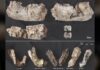
Researchers led by Ahmed Al-Boug of the National Center for Wildlife in Riyadh, Saudi Arabia, surveyed 134 caves in northern Saudi Arabia during 2022 and 2023. In five of them, they uncovered a treasure trove: 54 skeletons and seven remarkably preserved mummies. The extreme aridity of the desert climate has acted as a natural preservation agent, allowing these remains to endure for centuries, even millennia. Carbon dating reveals that the cheetahs range in age from just over 100 years old to more than 4,200 years old.
Genetic Diversity Holds the Key
The real value of these remains lies in their DNA. A new genetic analysis, published in Communications Earth & Environment, shows that the lost Arabian cheetahs were not genetically uniform. Instead, they were closely related to both Asiatic cheetahs (A. jubatus venaticus) and northwest African cheetahs (A. jubatus hecki). This finding is crucial because it provides conservationists with two potential genetic sources for reintroduction efforts.
Why this matters: Historically, reintroduction programs often rely on limited gene pools, increasing the risk of inbreeding and reducing the species’ long-term viability. The discovery of two distinct genetic lineages offers a chance to establish a more resilient population.
A Cautionary Approach to Rewilding
The National Center for Wildlife is already working to breed cheetahs for reintroduction into Saudi Arabia. These ancient DNA samples could help select individuals with the best chance of adapting to the region’s conditions. However, experts like Liz Kierepka, a molecular ecologist, caution against reckless relocation.
“Both the modern subspecies are also critically endangered… Relocating cheetahs from these already tiny, struggling populations has the potential to cause new problems for the donor pools.”
The current populations of both subspecies are so fragile that removing individuals for reintroduction could further destabilize them. Therefore, any rewilding project must proceed with careful genetic analysis to identify donor cheetahs with traits best suited for survival in Arabia.
The Future of Arabian Cheetahs
The discovery of these ancient remains represents a significant step forward in the effort to bring cheetahs back to Arabia. Further research into the genomes of these animals may reveal specific adaptations that could make reintroduction more successful. While challenges remain, the possibility of seeing these magnificent predators sprint across the Arabian sands once again is now more realistic than ever before.