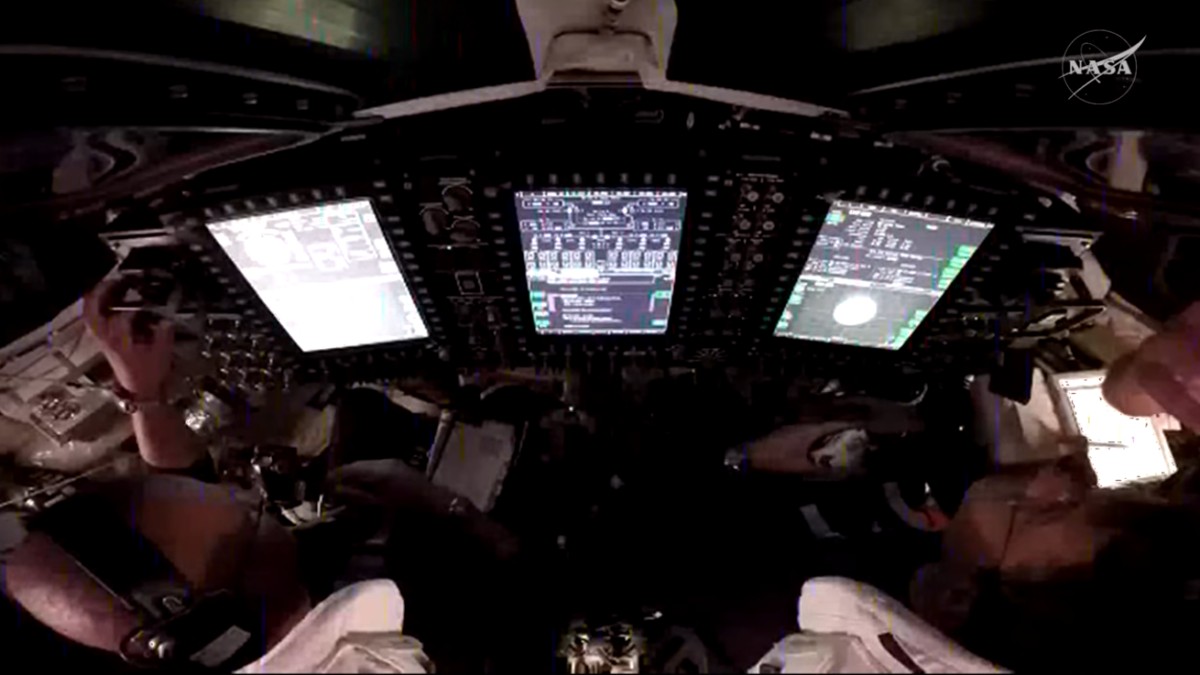
NASA has officially entered a new era of lunar exploration with Artemis II, the first crewed mission of the Artemis program. As Commander Reid Wiseman, pilot Victor Glover, and mission specialists Christina Koch and Jeremy Hansen journey around the Moon, NASA is providing the public with unprecedented access to their progress through digital tracking tools.
Real-Time Tracking via AROW
To bridge the gap between complex deep-space telemetry and public interest, NASA has launched the Artemis Real-time Orbit Website (AROW). This platform translates raw sensor data—the same information used by mission control in Houston—into an intuitive visual interface.
Rather than deciphering technical coordinates, users can monitor the mission through:
– Live Positional Data: A visual representation of the Orion spacecraft’s current location in space.
– Trajectory Mapping: A clear view of the spacecraft’s “figure-eight” flight path.
– Distance Metrics: Real-time updates on how far the crew is from Earth.
The tracker is active throughout the roughly 10-day mission, providing continuous updates from liftoff until the spacecraft re-enters Earth’s atmosphere for its final splashdown.
Interactive and Augmented Reality Features
For those looking for a more immersive experience, NASA has expanded its digital toolkit beyond the web browser:
- The NASA App: Offers a mobile-friendly version of the tracker.
- Augmented Reality (AR): Through the app, users can use their smartphone sensors to align on-screen markers with the actual position of the Orion spacecraft relative to their location on Earth.
- Historical Context: The AROW website does more than track movement; it highlights lunar landmarks, including the historic landing sites from the Apollo program. This connection emphasizes the lineage of the mission, as the Artemis program is named after the twin sister of Apollo in Greek mythology.
Why This Mission Matters
Artemis II is not merely a flight around the Moon; it is a critical proof-of-concept for the future of human spaceflight. By successfully sending a crew around the Moon and returning them safely to Earth, NASA is validating the life-support and navigation systems required for much more ambitious goals.
The mission serves two primary long-term objectives:
– Establishing a Lunar Presence: Testing the systems necessary to eventually land humans on the Moon and sustain them there.
– Pathfinding for Mars: Proving the technologies required for the ultimate challenge—the first crewed mission to Mars.
Currently, the crew is navigating a high-Earth orbit, a phase designed to allow for rigorous system checks before they commit to the trajectory toward the Moon.
The ability to track Orion in real time transforms a complex scientific endeavor into a shared global experience, connecting the public directly to the next giant leap in space exploration.
Conclusion
Through the AROW website and NASA’s mobile app, the public can witness the milestones of Artemis II as they happen. This mission represents a vital stepping stone in NASA’s journey to return humans to the lunar surface and eventually reach Mars.