


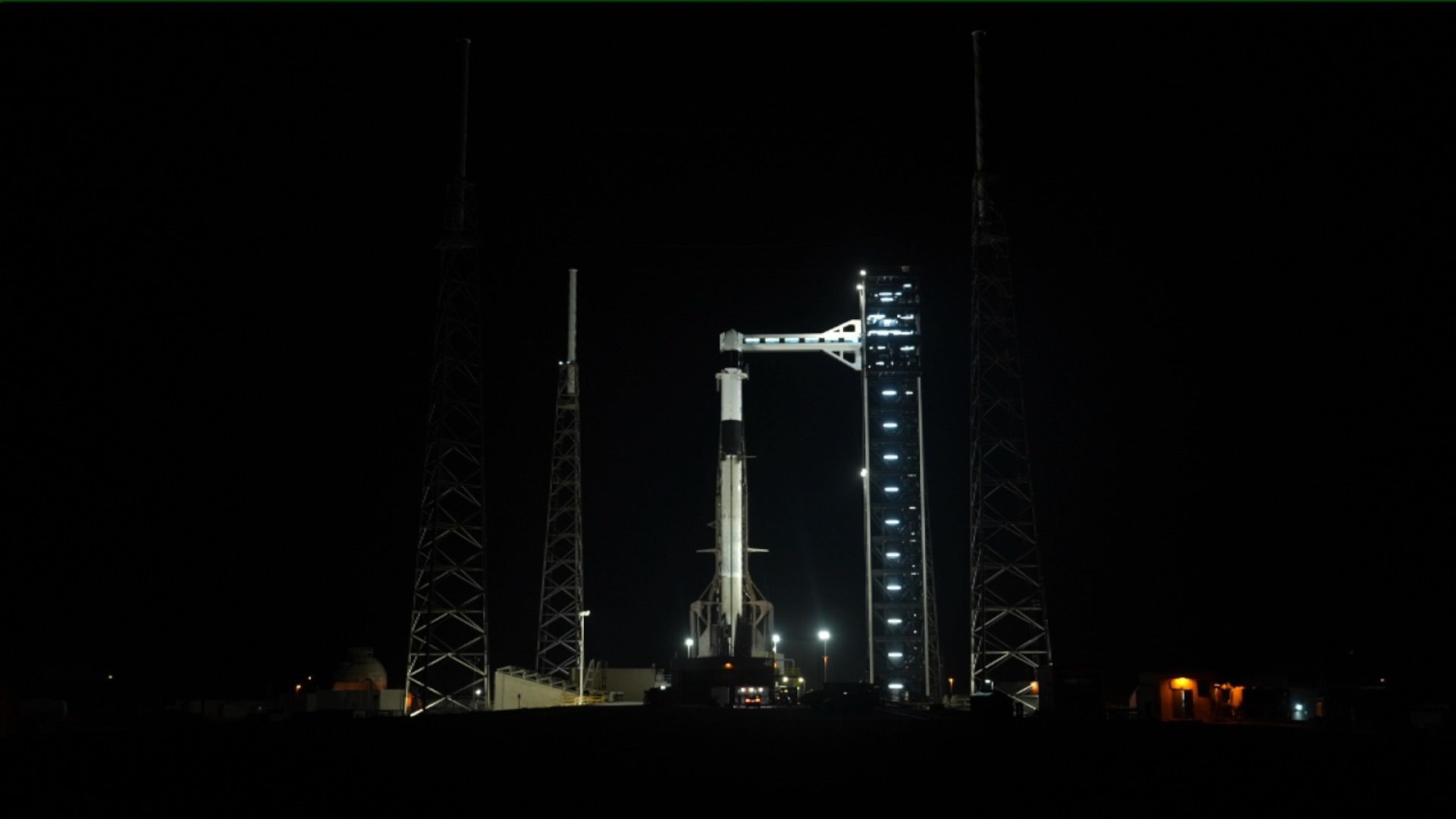
SpaceX successfully launched the Crew-12 mission to the International Space Station (ISS) early Friday morning, February 13th, from Cape Canaveral, Florida. The Falcon 9 rocket carried four astronauts into orbit, restoring the ISS to its full crew capacity after a period of reduced staffing.
Mission Details
The Crew-12 mission consists of NASA astronauts Jessica Meir (commander) and Jack Hathaway (pilot), along with European Space Agency astronaut Sophie Adenot and cosmonaut Andrey Fedyaev, both serving as mission specialists. Notably, Adenot and Hathaway are making their first spaceflights, while Meir and Fedyaev are veteran astronauts. The crew will spend approximately nine months aboard the ISS, exceeding the standard six-month rotation.
Return to Full Capacity
The ISS had been operating with a reduced crew of three since the return of SpaceX’s Crew-11 mission in mid-January. Crew-12’s arrival brings the station back to its usual seven-person complement, ensuring continued research and operational effectiveness. The Crew Dragon capsule, named “Freedom,” docked with the ISS on Saturday, February 14th.
Why This Matters
The continuation of crewed missions to the ISS is crucial for ongoing scientific research, particularly in areas like biology, medicine, and materials science. Reduced crew sizes can impact the volume and pace of experiments conducted on the station. The longer-than-usual nine-month rotation suggests an increased workload or a need for sustained operational expertise.
The success of Crew-12 underscores the growing reliability of commercial spaceflight partnerships with NASA, reducing dependence on traditional government programs. This launch further cements SpaceX’s role as a primary transportation provider to the ISS.
The mission is a testament to international cooperation in space, with astronauts representing both NASA and ESA, as well as Russia’s Roscosmos. This collaboration remains vital for maintaining the ISS as a hub for scientific exploration and technological advancement.


