NASA’s Parker Solar Probe has achieved a breakthrough in solar science: the first detailed maps of the sun’s outer atmosphere, known as the corona. This is significant because it provides insight into the processes that drive solar winds and space weather, which directly affect technology on Earth.
Reaching the Unreachable
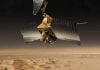
The Parker Solar Probe is the first spacecraft to fly close enough to the sun to study its corona firsthand. Since 2021, it has repeatedly dipped into this extreme environment, surviving temperatures exceeding 2,500°F (1,370°C) thanks to its advanced heat shield. Despite the corona itself reaching temperatures of 1 million to 3 million °F (555,000°C), its low density allows the probe to pass through it safely.
Defining the Alfvén Surface
The probe’s primary objective has been to map the Alfvén surface — an invisible boundary where solar particles escape into the solar wind, a constant stream of charged particles flowing from the sun at 1 million mph (1.6 million km/h). This region was previously poorly understood, but Parker’s data, collected over seven years, now reveals its dynamic nature.
The maps show that the Alfvén surface isn’t static. It changes shape and extends further from the sun as solar activity increases. The sun operates on an approximately 11-year cycle, with periods of high activity (solar maximum) bringing more frequent and powerful solar flares. As the sun becomes more active, the Alfvén surface becomes “spikier” and more turbulent. This directly impacts how solar winds behave, a critical factor in understanding space weather.
Why This Matters for Earth
Understanding the Alfvén surface isn’t just academic; it has practical implications. Solar flares and coronal mass ejections can disrupt vital technologies on Earth, including:
– GPS systems
– Communication networks
– Power grids
By better predicting solar activity, scientists and operators can prepare for potential disruptions. The probe’s ability to map the Alfvén surface in real-time could be instrumental in improving these predictions.
Record-Breaking Performance and Continued Mission
Parker Solar Probe completed its 25th flyby in September, matching its closest approach of 3.8 million miles (6.2 million kilometers) from the sun’s surface. It also achieved a record speed of 427,000 mph (687,000 km/h), making it the fastest human-made object in history. Despite completing its primary mission, the probe remains operational and will continue collecting data through at least mid-2029.
The Parker Solar Probe’s ongoing observations are revolutionizing our understanding of the sun’s corona and its influence on space weather, providing critical data for protecting Earth-based technologies.