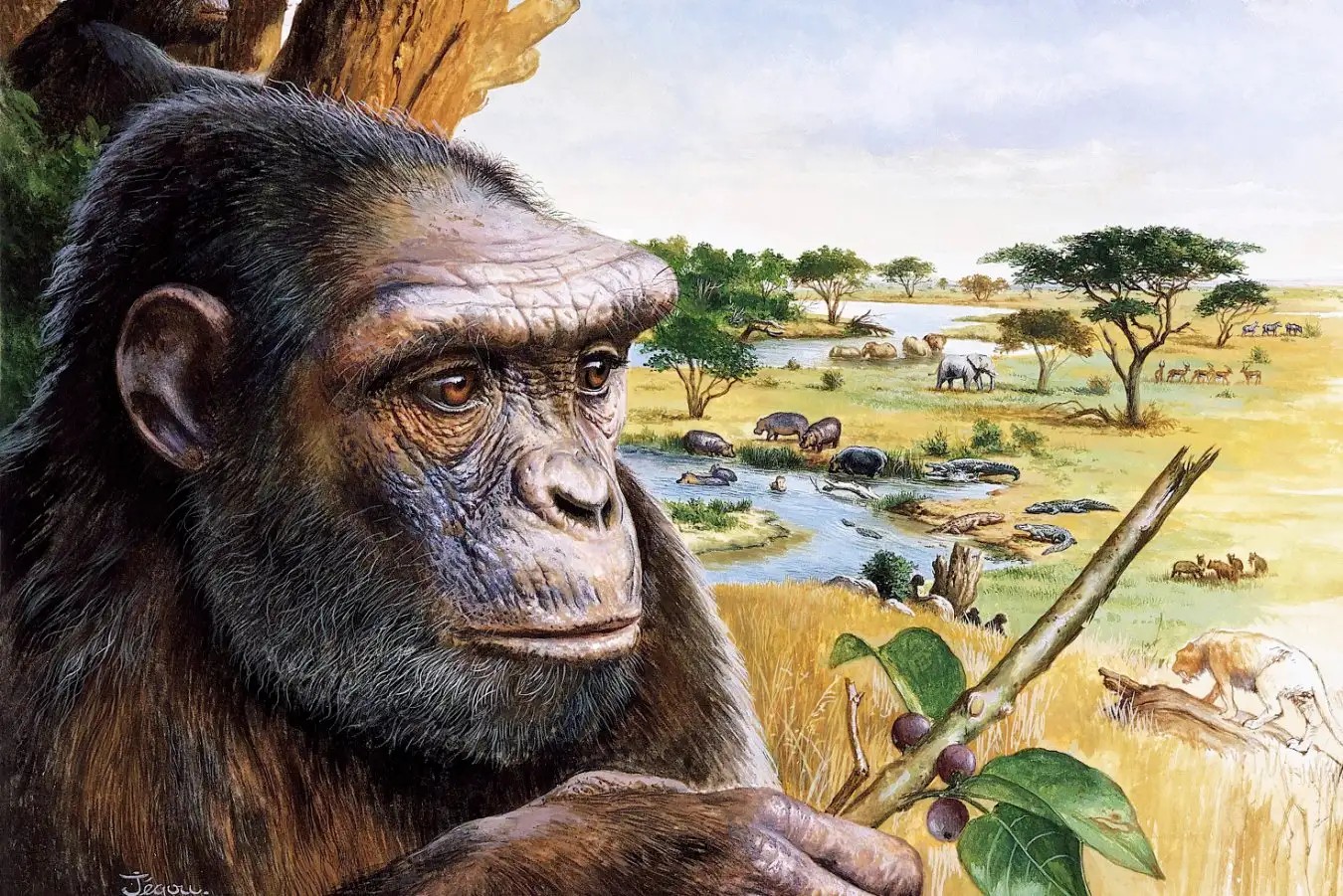
For over two decades, scientists have debated whether Sahelanthropus tchadensis, one of the earliest known hominin fossils, walked upright. Recent research suggests this ancient ancestor did walk on two legs, resolving a long-standing dispute, though some researchers remain unconvinced.
The Fossil and the Controversy
The 7-million-year-old remains, discovered in Chad, include a skull, teeth, and bone fragments. Initial analysis suggested an upright posture, but later studies questioned this claim, with some arguing the femur (thigh bone) resembled those of non-bipedal apes. The debate has been intense, with opposing teams publishing conflicting interpretations of the available evidence.
New Findings Support Upright Posture
A team led by Scott Williams at New York University re-examined the fossil remains and found three key anatomical features supporting bipedalism:
- Gluteus Maximus Attachment: The point where this muscle attaches to the femur resembles that of modern hominins, indicating a similar gait.
- Bone Proportions: While the bones are similar in size to chimpanzees, their proportions align more closely with those of upright-walking hominins.
- Femoral Tubercle: A small bump on the femur, crucial for stabilizing the hip joint during walking, was identified, a feature absent in non-bipedal apes.
These findings suggest that Sahelanthropus wasn’t simply a transitional species, but an early hominin already adapted for upright movement.
Why This Matters
The debate over Sahelanthropus ’s locomotion is more than academic. It challenges the idea of a neat, linear progression in human evolution. If this species was already bipedal 7 million years ago, it means upright walking evolved earlier than previously thought, possibly in response to environmental changes (like forest fragmentation) that favored individuals who could see over tall grass.
Lingering Doubts and Future Research
Not all scientists agree. Some researchers maintain the fossils still resemble those of great apes and that the evidence for bipedalism is inconclusive. John Hawks at the University of Wisconsin-Madison suggests the early hominin lineage may have been more “fuzzy” than previously imagined, with species exhibiting a mix of ape-like and human-like traits.
The debate will likely continue until new fossil discoveries provide definitive answers. The current evidence, however, strongly suggests that Sahelanthropus tchadensis represents a crucial step in the long journey of human evolution.