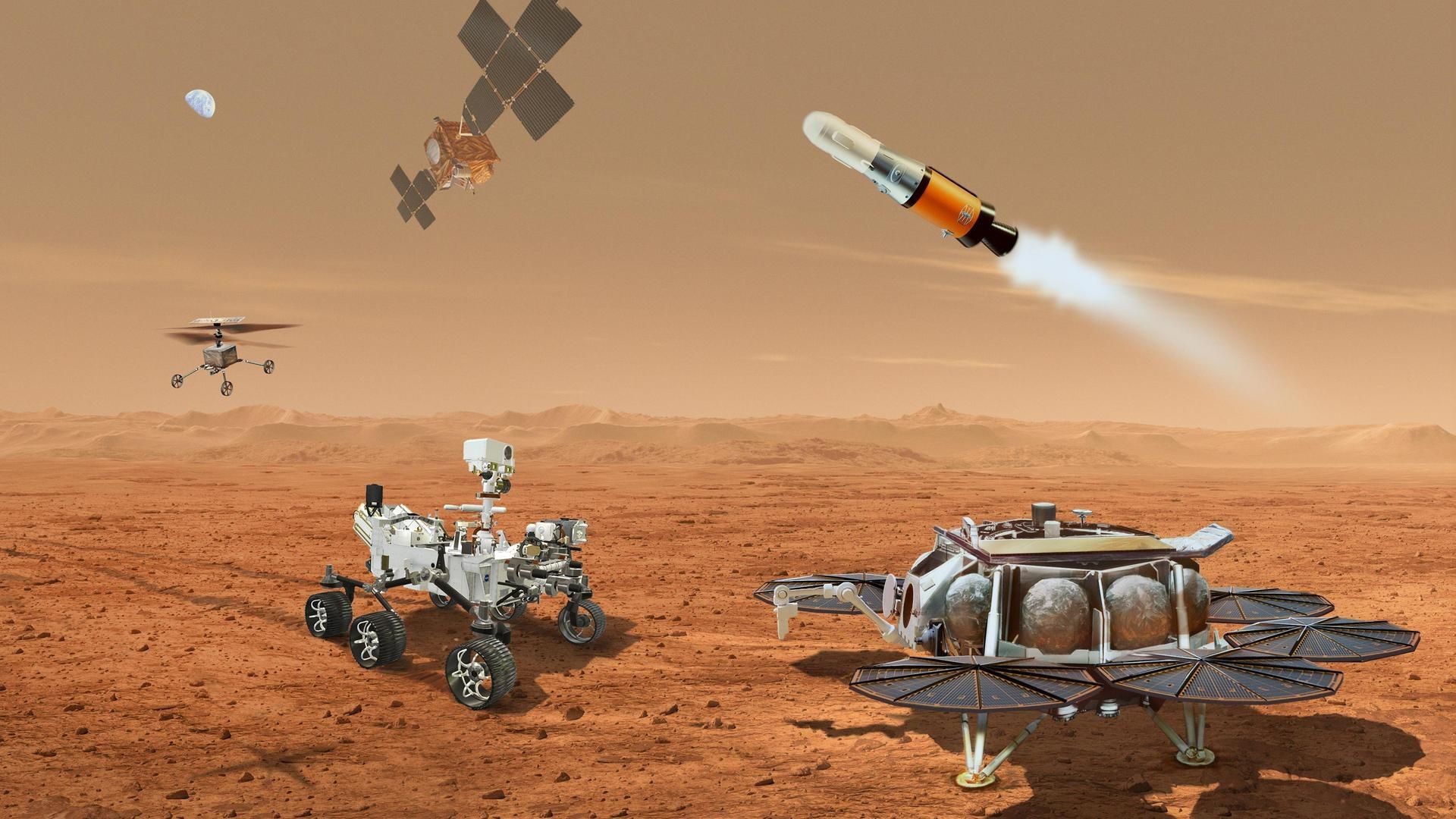
NASA’s ambitious Mars Sample Return (MSR) program has been effectively terminated due to budget constraints, opening the door for China to take the lead in retrieving potential evidence of life from the Red Planet. The decision, enshrined in a recent U.S. Senate spending bill, means rock samples collected by the Perseverance rover – which may contain ancient biosignatures – will remain on Mars indefinitely, unless a future revival occurs.
Program’s Demise: Cost and Political Shifts
The cancellation stems from escalating program costs and shifting political priorities. Independent reviews in early 2025 estimated the MSR program could exceed $11 billion, with sample retrieval not expected until 2040. This financial burden, coupled with previous budget cuts proposed by the Trump administration (though partially reversed in the latest bill), proved unsustainable. The Senate’s decision reflects a pragmatic compromise: preserving some funding for related technologies ($110 million allocated to “Mars Future Missions”) while abandoning the full-scale return mission.
This shift is significant because the Perseverance rover has already collected over 30 geological samples, including one described by NASA as “the clearest sign of life” ever found on Mars. While there is no definitive proof of past Martian life, the potential for discovery makes the program’s cancellation a major setback for those hoping to study these samples firsthand.
China’s Opportunity: A Race to Retrieve
With the U.S. program stalled, China is now positioned to become the first nation to bring Martian samples back to Earth. Their Tianwen-3 mission, slated for launch in 2028 with a return expected by 2031, will target a different, less promising site than Perseverance’s exploration area. However, the absence of U.S. competition means China could secure a first-mover advantage in analyzing Martian material.
The implications are clear: if life once existed on Mars, China may be the first to confirm it. This is not merely a scientific race; it also represents a geopolitical shift, with China potentially dominating future Martian research.
Broader Implications for Space Exploration
Despite the MSR cancellation, the U.S. continues to fund other key space science projects. The spending bill allocates $24.4 billion to NASA, including $7.25 billion for the Science Mission Directorate. This includes continued support for the Dragonfly mission to Titan, the James Webb Space Telescope, and the Nancy Grace Roman Space Telescope.
However, the MSR’s fate highlights the challenges of large-scale space missions in an era of budget constraints. The technologies developed under the program – radar, spectroscopy, entry, descent, and landing systems – remain valuable for future endeavors, but their full potential will be limited without a dedicated return mission.
In conclusion, the cancellation of NASA’s Mars Sample Return program marks a pivotal moment in the search for extraterrestrial life. While not entirely abandoning Martian exploration, the U.S. has ceded ground to China, which is now poised to lead the race to bring the first samples back from the Red Planet. The coming decade will reveal whether these samples hold the key to answering one of humanity’s most profound questions: are we alone?