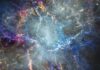
The Pleiades star cluster, a mesmerizing sight for stargazers, is nearing its seasonal disappearance from the night sky. Now is the last chance to observe this brilliant open cluster before it fades from view as spring advances.
The Vanishing Act
The Pleiades, visible at its best between October and March, is gradually sinking lower on the horizon each night. By late April, it will be obscured by the setting sun, remaining hidden until late June when it may briefly reappear near Mars in the predawn sky.
This is a natural cycle driven by Earth’s orbit around the Sun. The cluster’s visibility shifts with the seasons, making its current appearance a limited-time opportunity.
How to Find It
Locating the Pleiades is straightforward, even for beginner stargazers. The easiest method is to use Orion as a guide.
- Find Orion, the Hunter, in the southwestern sky after sunset.
- Identify Orion’s Belt – three bright stars aligned in a row.
- Draw an imaginary line extending beyond the rightmost star, passing the red giant Aldebaran.
- The Pleiades will appear as a hazy patch of light just beyond Aldebaran.
Binoculars (10×50) or a small telescope will reveal more of the cluster’s faint stars. The Pleiades is a rich grouping containing roughly 1,000 blue-white stars, though only seven are easily visible to the naked eye.
A Historic View
The Pleiades has captivated astronomers for centuries. Galileo Galilei was the first to observe it through a telescope in 1610, documenting his findings in his groundbreaking work Sidereus Nuncius. Viewing the Pleiades today connects you to a long tradition of stargazing.
The cluster’s ancient light reaches us across vast distances, offering a glimpse into the universe’s beauty. If you wish to observe the cluster in detail, consider using telescopes and astronomy apps available in 2026.
The Pleiades’ seasonal disappearance is a reminder of the dynamic nature of the night sky. Observing this cluster now allows you to witness a celestial spectacle before it returns months later.