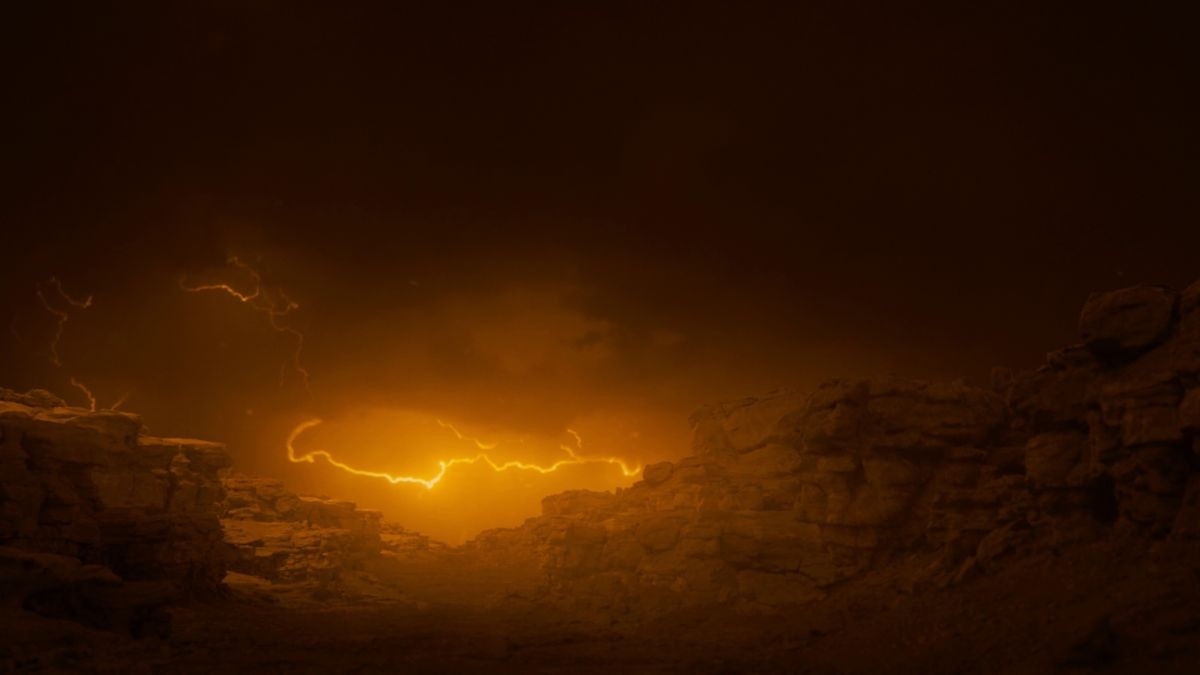
For the first time, scientists have definitively detected a radio signature consistent with lightning-like electrical discharges on Mars. The finding, confirmed through data collected by NASA’s MAVEN spacecraft in 2015 and recently analyzed, supports the theory that electrical activity occurs in the Martian atmosphere despite its thin, dry conditions.
Martian Lightning: Not Just About Water
Lightning on Earth is commonly associated with water-rich clouds. However, the presence of water isn’t a strict requirement. Volcanic ash plumes and dust storms also generate lightning on Earth. The newly detected signals on Mars suggest similar discharges can be produced by turbulent particles of sand in the planet’s frequent dust storms.
The discovery centers around a “whistler” – a distinctive radio wave produced when lightning emissions travel through a planet’s ionosphere. These waves, when translated into audio, resemble the descending call of a whale. The MAVEN spacecraft picked up this signal on June 21, 2015, and researchers have now confirmed its origin as a whistler.
How Lightning Works on Mars
Mars lacks a global magnetic field, but it retains localized “fossil” magnetic fields embedded in its crust. These patches of magnetism, remnants of an earlier global field, appear to channel the radio waves from electrical discharges. The MAVEN team analyzed over 108,000 plasma wave recordings, finally isolating a single event that matched predictions made decades ago.
The recorded whistler occurred at an altitude of 349 kilometers (217 miles) on the night side of Mars. The night side is crucial because the Martian ionosphere compresses under sunlight, inhibiting plasma wave propagation. The signal lasted 0.4 seconds, with a frequency sweep consistent with Earth-based lightning.
What This Means for Mars Research
The detected discharge was powerful, comparable to strong lightning on Earth, even accounting for signal loss during travel. The rarity of the signal – fewer than 1% of observed wave snapshots occurred in the right magnetic conditions – suggests lightning might be more frequent than previously thought.
This finding has implications beyond understanding Martian weather patterns. Electrical discharges are known to spark the formation of organic molecules in laboratory settings. If similar processes occur on Mars, it adds another piece to the puzzle when assessing the planet’s potential for past or present life.
The detection of whistlers on Mars reinforces the idea that fundamental physical processes operate similarly across planets, even under vastly different conditions. This is a critical step toward understanding the complex interplay between atmospheric electricity and planetary habitability.
The discovery highlights the value of continued orbital observation, as capturing such events requires precise timing and specialized instruments. Lightning on Mars may be common, but detecting it remains a challenge.