The United Kingdom has launched what is believed to be its first climate change training course specifically designed for individuals with learning disabilities. The program, developed by Positive Futures in collaboration with Keep Northern Ireland Beautiful, aims to make environmental awareness and action accessible to a demographic often excluded from broader sustainability discussions.
Breaking Down Barriers
Historically, climate change education has been largely inaccessible to people with learning disabilities due to complex terminology, abstract concepts, and a general lack of adapted materials. Agnes Lunny, chief executive of Positive Futures, explains: “There’s often an assumption that people with learning disabilities ‘don’t understand,’ which leads to exclusion. But the problem isn’t their understanding; it’s the way the information is presented.” The course addresses this by simplifying concepts and using visual aids, such as bingo-style games, to illustrate practical solutions.
Real-World Impact: The McKinney Brothers
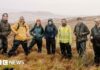
The program has already demonstrated success with Patrick and Michael McKinney, two brothers with special needs living in supported accommodation in County Tyrone. Their engagement highlights the potential of tailored education. Patrick advocates for buying second-hand clothing, while Michael focuses on composting food waste from their garden. They also practice energy conservation by turning off lights and utilize reusable water bottles.
The Ripple Effect
The initiative’s impact extends beyond individual actions. Hanna Coney, a support worker for the brothers, noted that the training boosted their confidence and independence. “Climate change can be a frightening topic, but this course avoids fear-mongering and empowers them to make a difference.” The program will expand to other support services by 2026, potentially reaching a wider audience.
Why This Matters
This development underscores a growing recognition that climate action requires inclusivity. People with learning disabilities are disproportionately affected by environmental changes, yet they are rarely included in the solutions. Making education accessible ensures everyone can participate in building a sustainable future. The success of this UK program may serve as a model for similar initiatives globally.
Climate change affects all citizens, and education must reflect that reality. By removing barriers and tailoring content, we empower everyone to contribute to a healthier planet.