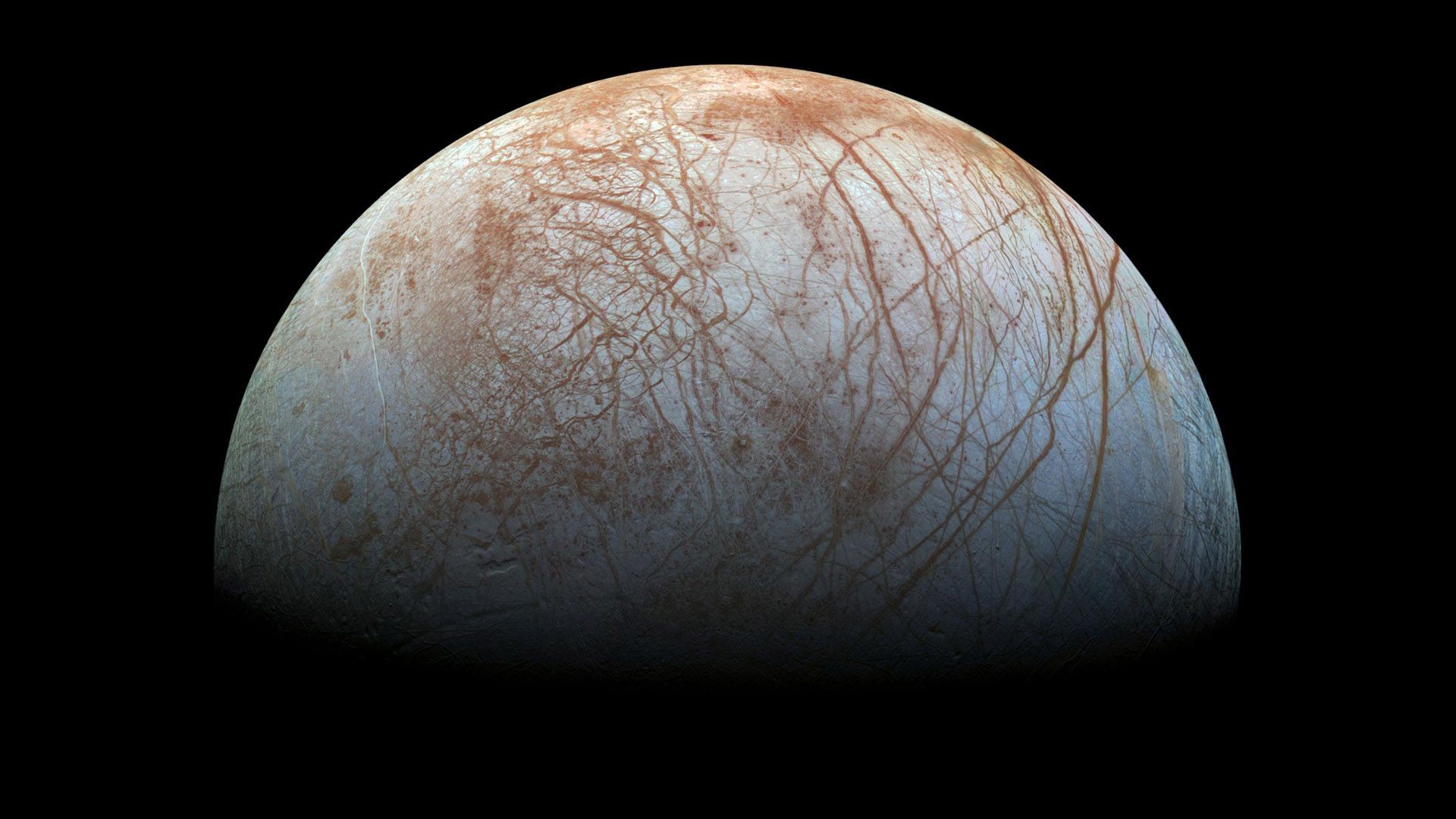
Jupiter’s moon Europa harbors a vast, hidden ocean beneath its icy shell – a leading candidate in the search for extraterrestrial life. New research suggests a previously overlooked process could be delivering essential chemical building blocks from the surface to this ocean, despite the extreme conditions.
The Challenge of Habitability
Europa’s ocean, thought to contain twice the water of Earth’s, is shielded from sunlight and lacks free oxygen. Any life there would likely rely on chemical energy, but delivering the necessary ingredients through the thick ice shell has been a major scientific puzzle. Surface oxidants, created by Jupiter’s intense radiation, are key to this energy, but how they get into the ocean was unclear.
A Slow Descent: Lithospheric Foundering
Researchers at Washington State University propose that sinking ice may be the answer. This process, called lithospheric foundering, is analogous to what happens on Earth, where portions of the planet’s crust sink into the mantle. On Europa, pockets of salt-rich ice become denser and weaker than surrounding ice, causing them to detach and slowly descend through the shell.
“This is a novel idea in planetary science… and is a good sign for the prospects of extraterrestrial life in its ocean.” – Austin Green, Virginia Tech
How It Works: Computer Modeling Reveals Descent Times
Using computer models, the team simulated Europa’s ice shell (roughly 18.6 miles thick) under various conditions. In all scenarios, surface material descended toward the base of the shell. The sinking process could take anywhere from 30,000 to 10 million years, depending on the ice’s structure and damage. Even moderately weakened ice allowed for relatively quick transport of surface materials.
Why This Matters: A Realistic Pathway for Life-Supporting Chemicals
The study suggests that even small amounts of weakening in Europa’s ice could trigger this sinking process, making it an efficient way to deliver oxidants to the ocean. This addresses a major obstacle to habitability and increases the likelihood of finding life on Europa.
Next Steps: Europa Clipper’s Imminent Arrival
NASA’s Europa Clipper mission, launching in 2024, will arrive at Jupiter in 2030. It will conduct dozens of close flybys, assessing the ocean’s depth and further evaluating Europa’s potential habitability. The upcoming data will be crucial in confirming whether this sinking ice mechanism is indeed at play.
In conclusion: Europa’s ocean may be receiving a steady supply of life-supporting chemicals through a slow but persistent geological process. This discovery adds to the growing optimism surrounding the potential for extraterrestrial life on this icy moon and underscores the importance of upcoming missions like Europa Clipper.