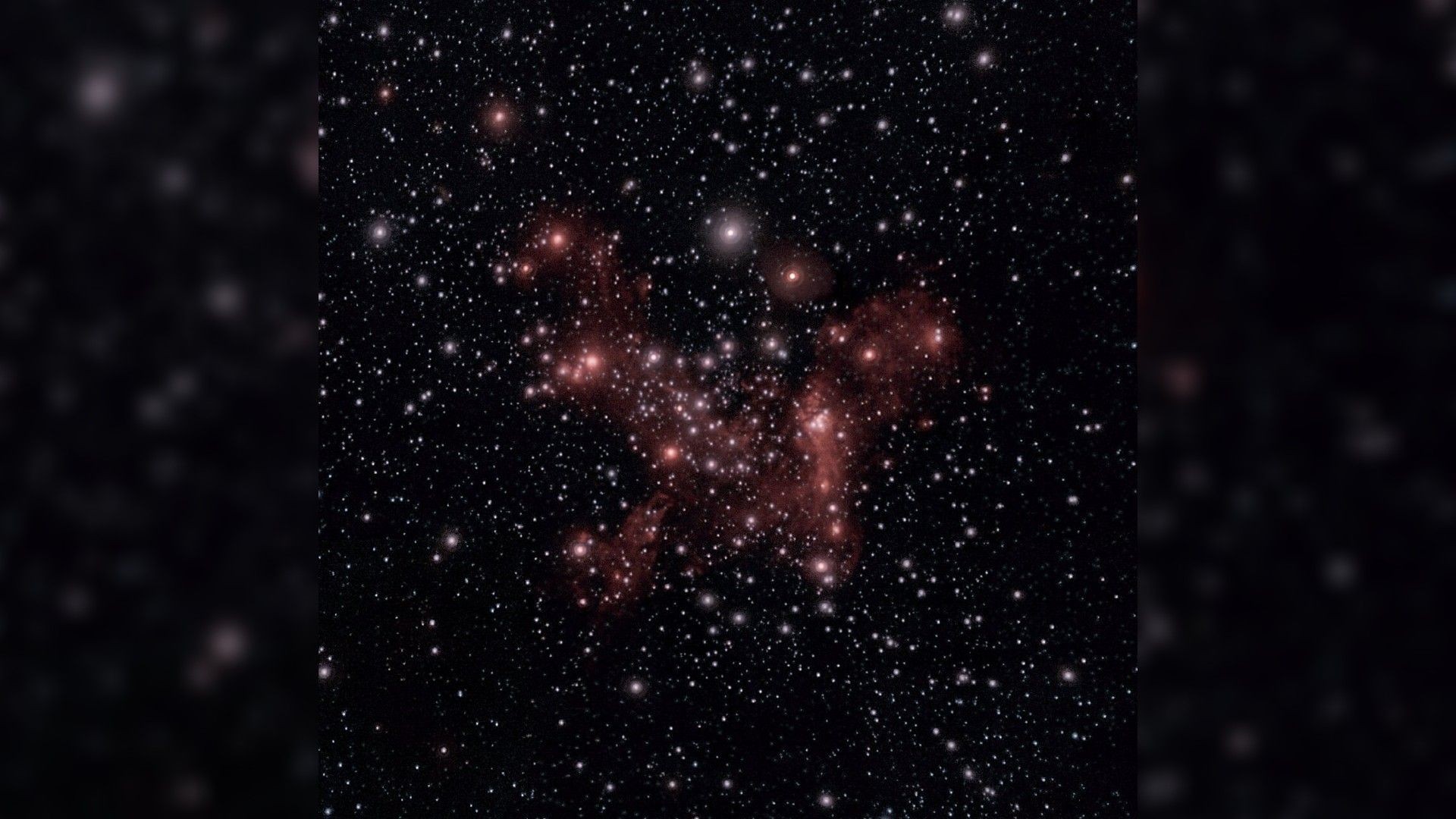
Astronomers have detected a third gas cloud orbiting Sagittarius A (Sgr A ), the supermassive black hole at the center of our galaxy. The discovery, made using the European Southern Observatory’s (ESO) Very Large Telescope (VLT), provides further insight into the dynamic environment surrounding this “invisible giant.”
The G-Triplet: A Family of Gas Clouds
Previously, two gas clouds – G1 and G2 – were observed spiraling toward Sgr A*. Now, observations suggest a third cloud, dubbed G2t, is also in orbit. These three clouds likely originate from the same source: a pair of massive stars called IRS16SW. As IRS16SW moves around the black hole, it ejects gas clouds in slightly different orbits, explaining their unique trajectories.
This finding demonstrates that despite decades of monitoring the galactic center, surprises continue to emerge. The ESO statement notes that “new unanswered curiosities still arise,” highlighting the persistent mysteries at the core of the Milky Way.
Why Study These Clouds?
Black holes themselves are invisible because not even light can escape their gravity. Astronomers rely on indirect observations, such as the light emitted by superheated gas swirling around the event horizon. In 2022, scientists captured the first direct image of Sgr A* using radio waves.
Clouds like G2t are valuable because they allow astronomers to study the black hole’s influence on its surroundings. As these clouds approach Sgr A*, their behavior reveals how gravity interacts with matter under extreme conditions. The discovery of G2t is significant because it reinforces the complexity of the galactic center and opens new avenues for research.
Implications for Understanding Galactic Centers
The existence of the “G-triplet” suggests that star formation and gas dynamics near supermassive black holes are more active than previously thought. This could have implications for understanding how galaxies evolve, as the central black hole profoundly influences its host galaxy’s structure and behavior.
Further observations will be crucial to unraveling the origins of these gas clouds and how they interact with Sgr A*. The ongoing exploration of our galaxy’s core promises to reveal more secrets about the forces that shape the universe.