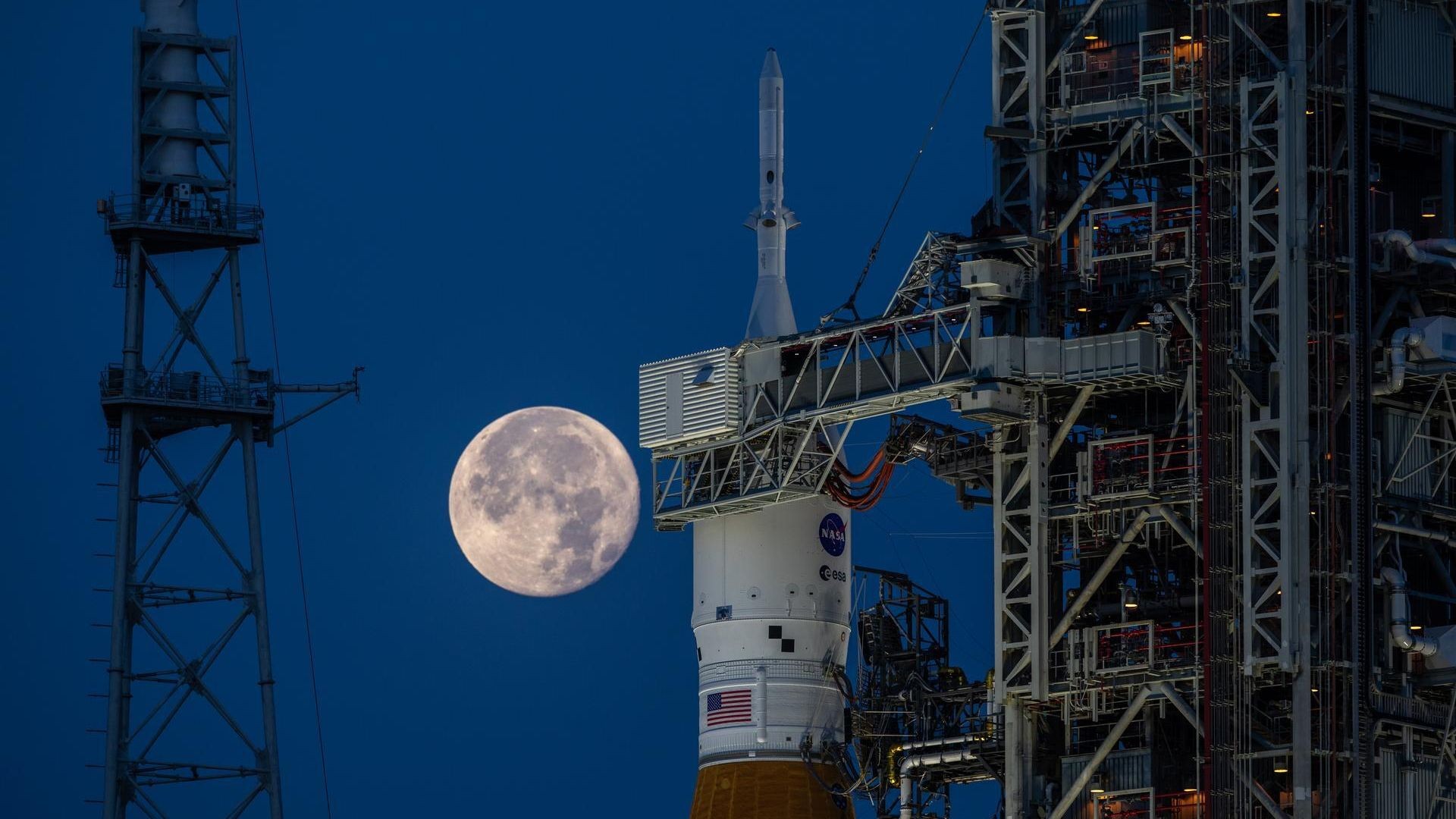
NASA is on track to launch its Artemis 2 mission within the next month, marking humanity’s return to lunar space for the first time in over half a century. The launch, currently scheduled for no earlier than February 6th, represents a crucial step in the agency’s long-term goal of establishing a sustained human presence on the Moon.
Mission Overview
The four-person crew – NASA astronauts Reid Wiseman, Victor Glover, and Christina Koch, alongside Canadian Space Agency astronaut Jeremy Hansen – has spent years in intensive training, including full launch simulations at the Kennedy Space Center (KSC) in Florida. The mission will see them aboard the Orion spacecraft, powered by NASA’s colossal Space Launch System (SLS) rocket, on a 10-day journey around the Moon and back.
The flight path is designed for maximum safety. After reaching Earth orbit, the crew will verify systems before igniting the upper stage for a translunar injection (TLI) burn. This maneuver will place Orion on a “free-return trajectory” – a figure-eight path around the Moon that guarantees a safe return to Earth even if unexpected issues arise after the initial burn.
A Program Decades in the Making
This mission is not just another space flight; it’s the culmination of nearly two decades of development and roughly $50 billion in investment. The SLS rocket, Orion capsule, and the overarching Artemis program have faced delays and evolving designs since 2006, resulting in a current per-launch cost of around $4 billion.
The first unmanned test flight, Artemis 1, successfully sent an Orion capsule around the Moon in late 2022. However, damage to the heat shield during reentry forced a delay in Artemis 2’s original 2023 launch target. NASA has since devised a fix to prevent similar issues.
Looking Ahead: Artemis 3 and Beyond
While Artemis 2 is a crewed test flight, Artemis 3 – slated for 2027 (though potentially delayed to 2028) – aims to land astronauts on the lunar surface. This will rely on SpaceX’s Starship as the first Human Landing Services (HLS) vehicle. Delays in Starship’s development have prompted NASA to consider opening the HLS contract to alternative landers to expedite the timeline.
Currently, NASA is focused on Artemis 2. The SLS rocket and Orion were fully assembled at KSC in October and are set to roll out to Launch Complex-39A within days. Final systems checks, including a full wet dress rehearsal, will follow before the February launch window opens.
As NASA Press Secretary Bethany Stevens noted on January 2nd, “Artemis 2 continues to make steady progress, with rollout now less than two weeks away.”
The success of Artemis 2 is not just a technical achievement, but a critical step toward realizing a long-held vision of sustained lunar exploration. It validates the Artemis program’s hardware and sets the stage for future missions that could fundamentally change humanity’s relationship with the Moon.