NASA is approaching a pivotal milestone in its Artemis program as the Artemis II mission prepares for its most critical phase: a highly choreographed flyby of the Moon. This maneuver will take the crew around the far side of the lunar body, marking a significant step in humanity’s journey back to deep space.
The Mission Objective: Science in the Dark
As the spacecraft swings around the Moon, the four-person crew will execute a rigorous scientific itinerary. Rather than just a transit, this is a mobile laboratory mission. The crew has identified 30 distinct observation targets to document during the pass.
To manage this workload, the astronauts will operate in a coordinated rotation:
– Visual Documentation: Certain crew members will occupy central windows to photograph and record lunar landscapes.
– Operational Support: Other members will remain inside the cabin, managing systems and providing technical support to ensure the scientific data is captured accurately.
The “Blackout” Period: Navigating Silence
One of the most dramatic aspects of this flyby is the inevitable loss of communication. As the spacecraft moves behind the Moon, the lunar mass will physically block the line of sight between the crew and Mission Control in Houston.
This planned radio silence is expected to last approximately 40 minutes.
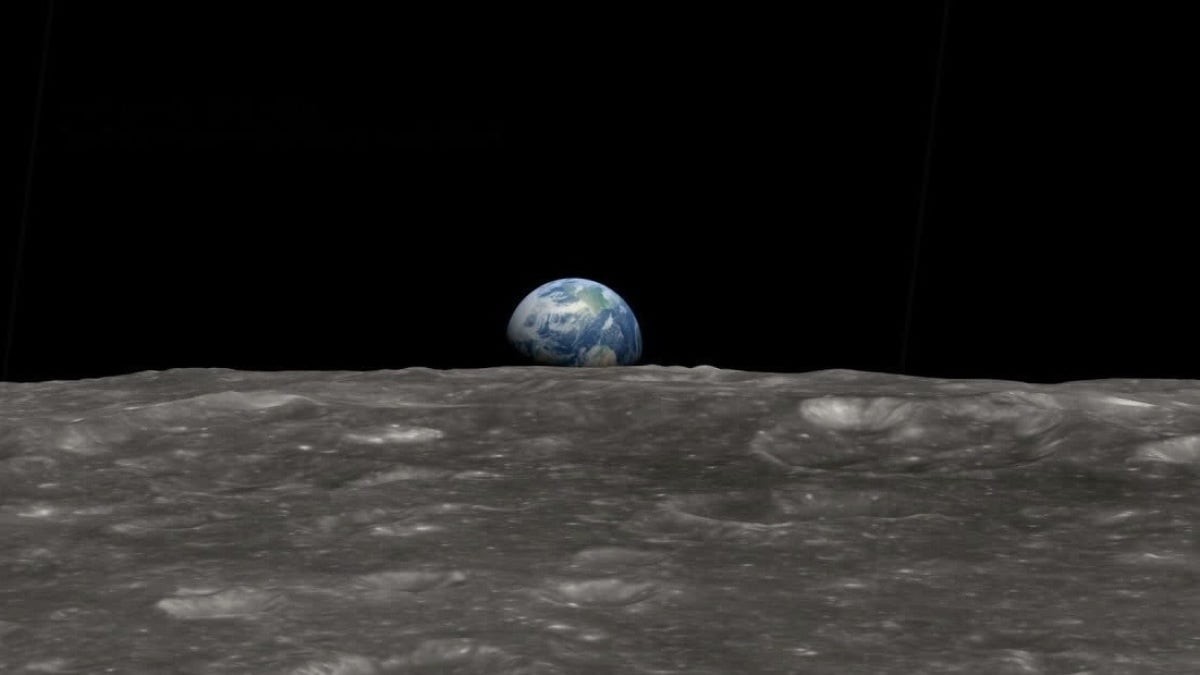
During this period, the crew will be entirely on their own, operating without real-time guidance from Earth. This “blackout” is a standard but intense test of the crew’s autonomy and the spacecraft’s independent systems. As the Moon moves into position, observers on Earth will witness a dramatic “Earthset,” where our home planet gradually disappears behind the lunar horizon.
Why This Matters
This mission is more than just a flight path; it is a vital test of human endurance and technical reliability in deep space.
The transition from Low Earth Orbit (LEO) to lunar distances introduces new variables, such as increased radiation exposure and the psychological challenge of losing contact with Earth. Successfully managing the 40-minute communication blackout and executing complex science tasks without ground support is a prerequisite for NASA’s ultimate goal: landing humans on the lunar surface and, eventually, Mars.
Summary
The Artemis II lunar flyby represents a transition from Earth-centric spaceflight to true deep-space exploration. By successfully navigating the Moon’s far side and managing periods of isolation, the crew is proving that humanity can operate independently in the lunar environment.