Scientists have synthesized a novel molecular structure – a “half-Möbius” molecule – pushing the boundaries of molecular topology. Reported in Science on March 5th, this breakthrough introduces a previously unseen geometric arrangement that could reshape our understanding of molecular behavior.
What are Möbius Molecules?
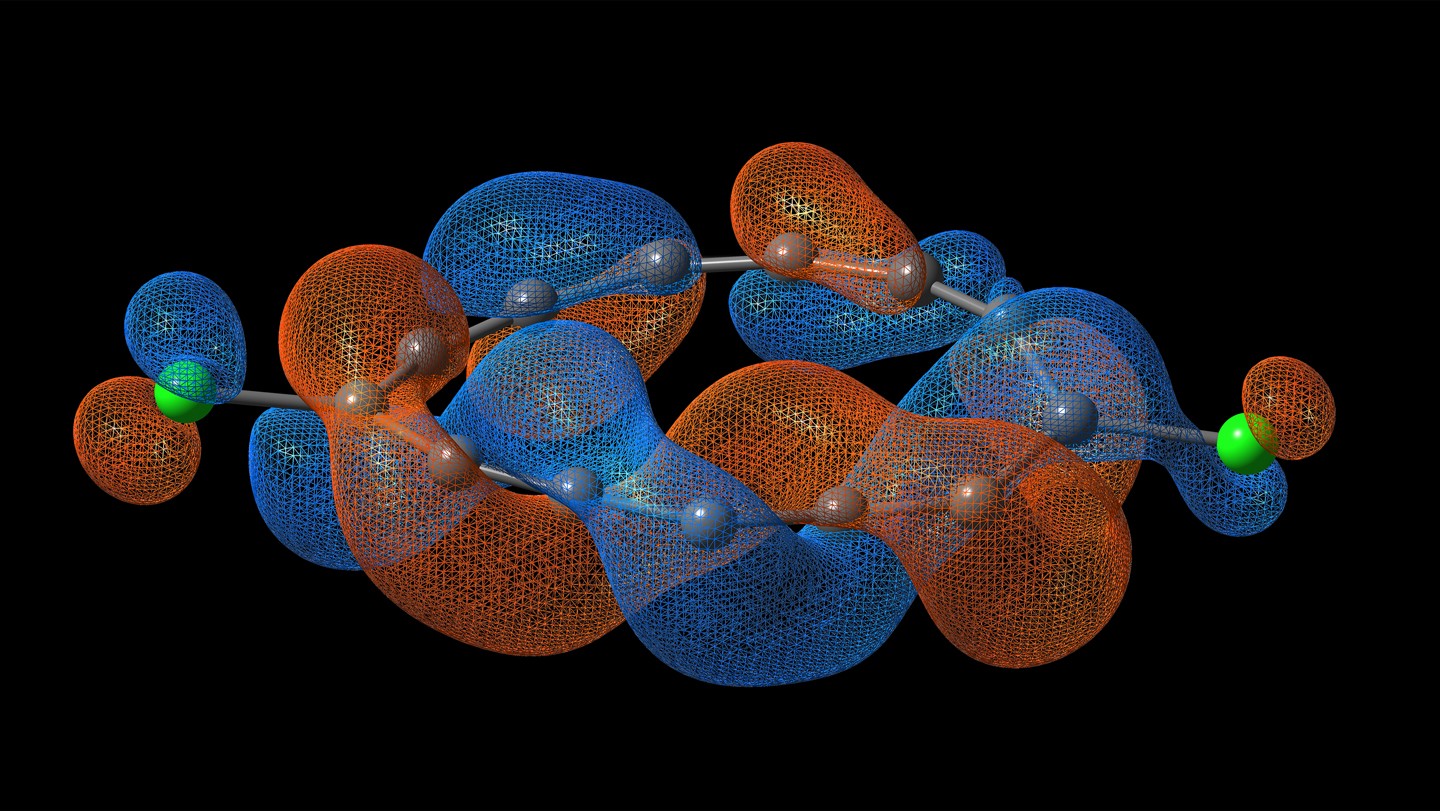
The concept originates from mathematics, where a Möbius strip is created by twisting a loop before joining its ends. A traditional molecular Möbius strip involves a full 180-degree twist, meaning you’d trace the loop twice to return to the start. This new molecule twists at only 90 degrees per revolution, requiring four circumnavigations to complete the loop. This is significant because it represents a fundamental departure from previously known molecular topologies.
How Was It Created?
The molecule comprises thirteen carbon atoms arranged in a ring, stabilized by two chlorine atoms that induce the necessary twist. Researchers confirmed the structure using advanced techniques like atomic force microscopy, scanning tunneling microscopy, and quantum computing simulations.
The team also demonstrated control over the molecule’s shape: applying energy can temporarily straighten the twist, showcasing its dynamic properties. This ability to manipulate topology opens exciting possibilities for future research.
Why Does This Matter?
Until now, chemists hadn’t considered half-Möbius structures feasible. Their existence challenges conventional assumptions about molecular geometry and electron behavior. Electrons move along the twisted path in ways not seen in standard molecules, potentially leading to unique chemical and physical properties.
While practical applications remain distant, the discovery establishes a new area of chemical exploration. As Igor Rončević of the University of Manchester notes, “No one really thought that this sort of thing could exist.” This underlines the potential for further unexpected discoveries at the intersection of mathematics, physics, and chemistry.
The creation of half-Möbius molecules represents a fundamental advance in molecular design, offering a new platform for manipulating matter at the nanoscale. The ability to engineer molecules with such unusual topologies could revolutionize fields ranging from materials science to drug discovery.