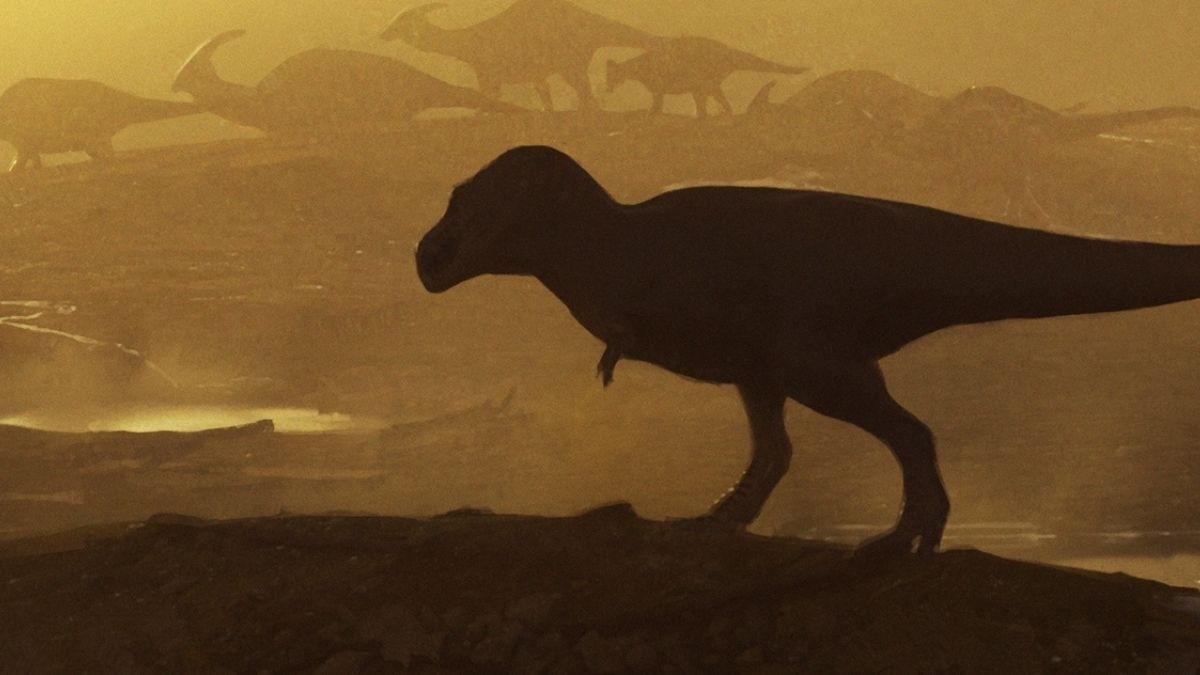
A newly re-examined fossil from New Mexico reveals the existence of a giant tyrannosaur that roamed North America roughly 74 million years ago – making it the largest predator of its time and potentially an early ancestor of the iconic Tyrannosaurus rex. The discovery challenges long-held assumptions about when and where these apex predators first achieved massive size.
Early Giant Among Tyrannosaurs
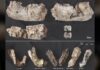
The fossil, a single shinbone unearthed in the 1980s, was recently analyzed by paleontologist Nicholas Longrich and colleagues. The bone dates to the Late Campanian period, significantly earlier than most T. rex fossils, which typically appear in the later Maastrichtian age. Despite its age, the shinbone’s dimensions are striking: it measures 84% the length and 78% the width of the largest known T. rex specimen, nicknamed “Sue.”
Based on these measurements, researchers estimate the dinosaur weighed around 5.2 tons – comparable to a large male African elephant. While smaller than the most massive tyrannosaurids, it remains the largest such predator found from this era. This discovery demonstrates that giant tyrannosaurs evolved earlier than previously understood.
Debate Over Origins
The discovery fuels an ongoing debate about the origins of Tyrannosaurus. Some paleontologists propose that the lineage originated in Asia, while others argue for a North American origin. The New Mexico fossil supports the latter hypothesis, suggesting that giant tyrannosaurs first evolved in the southern landmass known as Laramidia, which eventually formed part of modern North America.
Longrich’s team emphasizes that this southern origins theory is testable: if true, further fossil discoveries in southern Laramidia should reveal additional evidence of early tyrannosaurins. The shinbone’s age, confirmed through radiometric dating of volcanic ash layers, strongly indicates that large tyrannosaurids existed in this region during the Late Campanian.
Unclear Evolutionary Position
While the shinbone’s shape aligns it more closely with Tyrannosaurus than with other known tyrannosaurids like Bistahieversor, its exact position on the evolutionary tree remains unclear due to the limited fossil material. The bone’s robust structure, straight shaft, and triangular foot end all point to a closer relationship with T. rex.
However, researchers acknowledge that more complete remains – such as a full skeleton or even additional teeth and bones – are needed to definitively determine the dinosaur’s place in the tyrannosaur family. This discovery underscores the importance of continued paleontological work in Laramidia, as it may hold the key to unraveling the evolutionary history of these iconic predators.
The emergence of giant tyrannosaurids earlier than previously thought dramatically shifts our understanding of their evolutionary timeline and geographic origins. Further research promises to refine this picture, potentially confirming North America as the birthplace of these apex predators.