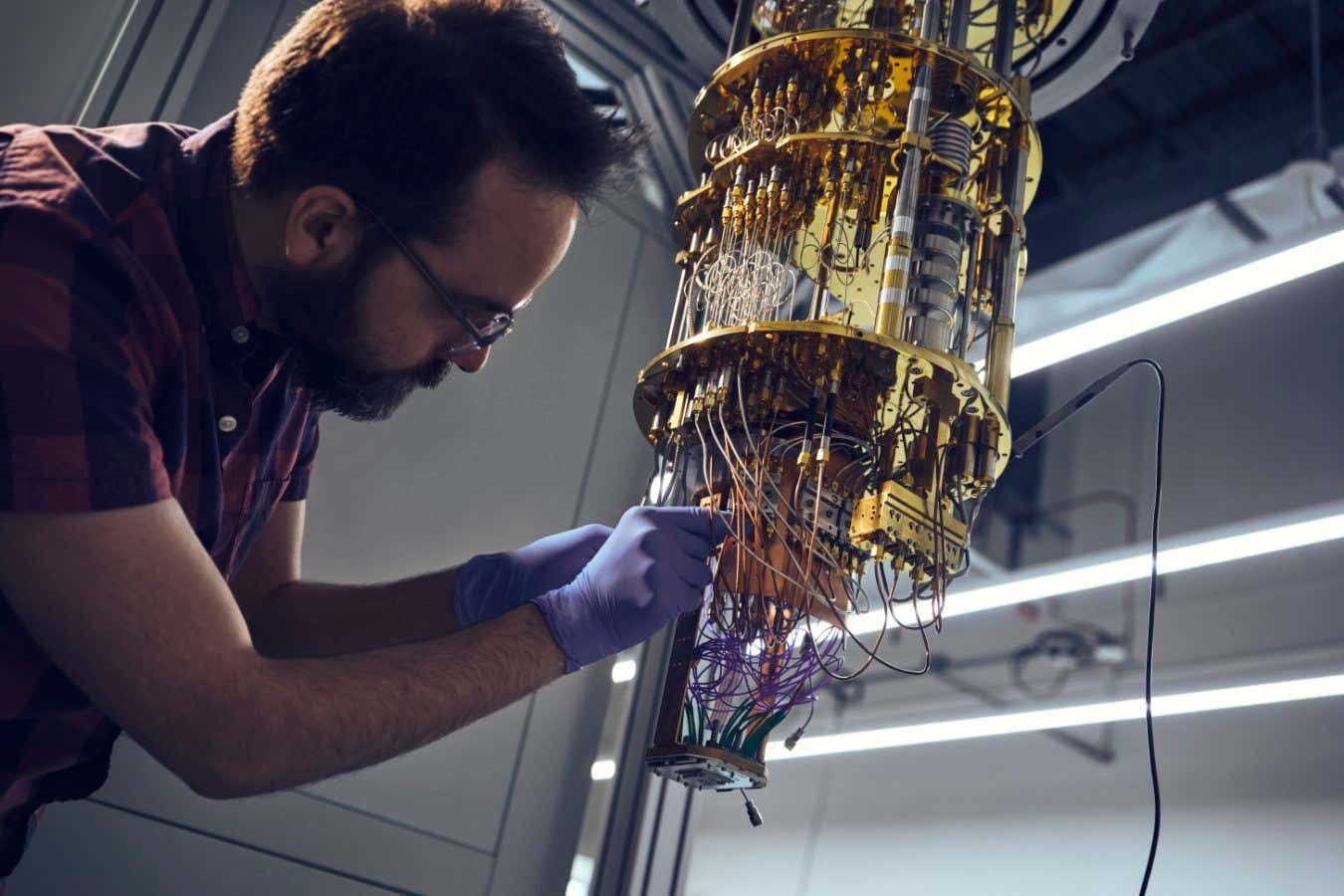
The quest for more powerful quantum computers may hinge on a technology dismissed decades ago: superconducting circuits. While the 1980s saw initial hype around these ultra-efficient components, they were ultimately sidelined by conventional, heat-spewing chips. Now, a new generation of researchers is revisiting this approach, with the potential to dramatically improve quantum computing’s scalability and efficiency.
The Forgotten Promise of Superconductivity
In 1980, IBM invested heavily in superconducting technology, envisioning computers that would minimize energy loss and maximize performance. Scientific American even featured a superconducting circuit on its cover, signaling the technology’s perceived potential. However, the need to maintain extremely cold temperatures proved too costly and impractical, leading IBM to abandon the effort by 1983. Despite this setback, the underlying principles remained relevant.
SEEQC: Bringing Superconductivity Back to the Forefront
One company, SEEQC, is actively reviving this approach. Their facility in upstate New York continues research initiated from IBM’s shuttered superconducting computing program. The firm aims to leverage superconducting chips to overcome current limitations in quantum computer design. Their fabrication process involves carefully layering ultrathin niobium metal onto dielectric materials, creating delicate structures essential for quantum operations.
The Core Problem: Energy Efficiency in Quantum Computing
Conventional computers lose energy as heat, becoming inefficient at scale. Michael Frank, a computer scientist, noted that a typical computer is essentially an expensive heater with a small computational side effect. Superconducting components, however, transmit electricity with perfect efficiency, eliminating this waste. The challenge lies in maintaining the extreme cold required for superconductivity – just a few degrees above absolute zero.
Quantum Computing’s Second Chance with Superconductors
Superconductors re-emerged in the late 1990s with the creation of the first superconducting qubit. This marked a shift from replicating conventional computing to exploring entirely new computational paradigms. Today, Google and IBM utilize superconducting qubits in their most powerful quantum computers, demonstrating potential breakthroughs in scientific problem-solving.
The Bottleneck: Scaling Quantum Systems
Despite these advances, quantum computers remain limited by practical engineering hurdles. Adding more qubits—the fundamental building blocks of quantum computation—requires exponentially increasing control mechanisms and cabling. The sheer physical complexity creates heat, degrades qubit performance, and ultimately limits scalability.
SEEQC’s Solution: Integrated Superconducting Control Chips
SEEQC’s innovation addresses this bottleneck. They’ve developed a chip integrating superconducting qubits with a conventional superconducting control circuit. This design eliminates the need for bulky, energy-intensive room-temperature components that currently dominate quantum computer architecture.
The key benefits include:
- Reduced Heat: By keeping all components within the same cryogenic environment, the system minimizes external heat interference.
- Energy Efficiency: The superconducting control chip operates at a fraction of the power required by conventional alternatives, potentially improving energy efficiency by a factor of a billion.
- Simplified Architecture: Integrated design reduces cabling complexity and signal delays, improving qubit control and error correction.
The Road Ahead
SEEQC is currently testing its chips with various qubit designs, showing promising early results. However, scaling to the million-qubit machines envisioned by researchers like David DiVincenzo remains a significant challenge. The firm is also addressing fundamental physics issues, such as preventing quantum vortices from disrupting qubit performance.
Ultimately, the revival of 1980s superconducting technology could redefine the future of quantum computing. By streamlining architecture and maximizing efficiency, SEEQC’s approach offers a path toward more powerful, scalable, and sustainable quantum systems.