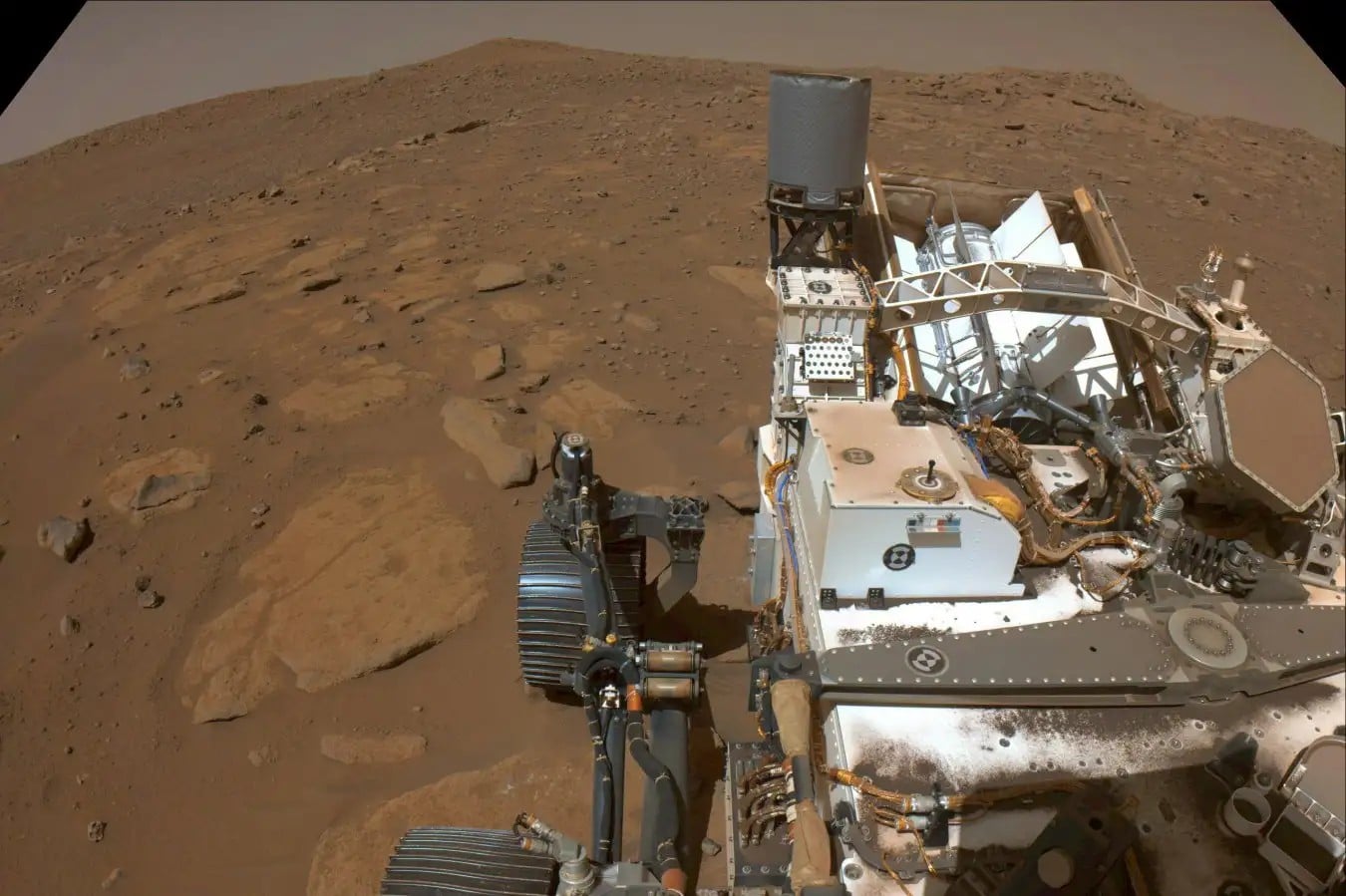
In 2025, data from NASA’s Perseverance rover has revealed compelling, though not definitive, evidence suggesting microbial life may have once existed on Mars. The findings center on unique geological formations dubbed “leopard spots” and greenish mineral nodules, which bear striking similarities to fossilized microbial structures found on Earth. This discovery marks a significant step forward in the search for extraterrestrial life, though conclusive proof remains elusive due to current limitations in sample analysis.
The Leopard Spots and Mineral Nodules: Key Findings
Perseverance identified rocks containing tiny, millimeter-wide “leopard spots” – dark-ringed splotches resembling microbial fossils. Detailed analysis by researchers at Stony Brook University, led by Joel Hurowitz, found high concentrations of iron and sulfur within these spots. These elements often form as a byproduct of microbial metabolic processes on Earth, raising the probability that similar biological activity occurred on Mars.
Alongside the leopard spots, the rover detected minuscule greenish mineral nodules that correlate with microbial life in terrestrial environments. Planetary scientist Hanna Sizemore, of the Planetary Science Institute, emphasizes that these findings are more promising than previous suggestions of life, such as methane fluctuations or structures in Martian meteorites. “I find it much more promising [an indication of life] than anything I’ve seen in the last 20 years,” she says. The scale of these formations aligns perfectly with potential microbial origins.
Why This Matters: The Ongoing Search for Extraterrestrial Life
The significance of these discoveries lies in their potential to reshape our understanding of life’s distribution in the universe. For decades, scientists have theorized that Mars once possessed conditions suitable for microbial life. The evidence gathered by Perseverance strengthens this hypothesis, suggesting that the planet may not be entirely lifeless.
However, confirming these findings requires bringing Martian samples back to Earth for thorough laboratory analysis. The current Mars Sample Return project, designed to retrieve these samples, faces potential cancellation under the proposed NASA budget for 2026. This would leave the most promising evidence of extraterrestrial life stranded on another planet, potentially forever beyond our reach.
The Future of Mars Exploration
The situation highlights a critical dilemma: we are on the verge of potentially confirming life beyond Earth, yet political and budgetary constraints threaten to halt further investigation. As Andrew Steele, of Carnegie Science, points out, “These samples represent the best chance that we have of a next step in the analysis of whether there is [or has been] life on Mars – we just have to bring them back.”
Without continued investment in Mars exploration and sample return missions, we risk missing out on definitive proof of past or even present life on the Red Planet. The findings in 2025 underscore the need for sustained commitment to space exploration and the pursuit of fundamental scientific questions.
Ultimately, while the evidence is compelling, it is not conclusive. The search for life on Mars remains an ongoing endeavor, balanced precariously between scientific progress and political realities.