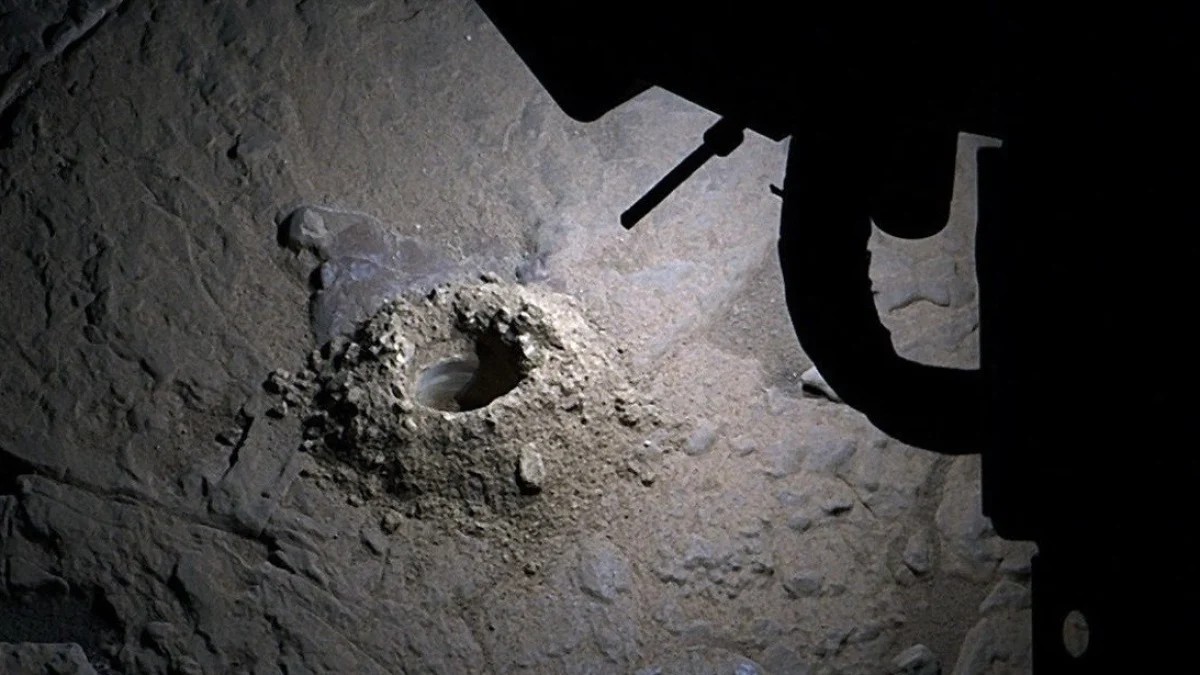
NASA’s Curiosity rover has performed its last chemical analysis of a Martian soil sample, seeking evidence of organic molecules that could indicate past or present life. The experiment, which utilizes a rare solvent called tetramethylammonium hydroxide (TMAH), is critical because Curiosity has limited supplies and this is its final chance to conduct this specific test.
The Significance of Organic Molecules
The search for organic molecules on Mars is crucial because these carbon-based compounds are the building blocks of life as we know it. While their presence doesn’t guarantee life existed, it suggests that the conditions for life could have been present at some point. The discovery of these molecules helps scientists reconstruct the history of Mars and determine if it once held habitable environments.
The Experiment: A Last Resort
Curiosity carries only a small amount of TMAH, having used the first container nearly six years ago. This final experiment was carefully planned after Mars emerged from “conjunction,” a period when communication with Earth is impossible due to the planets’ relative positions. The rover team even rehearsed the sample transfer to minimize errors. The technique involves dissolving powdered rock in TMAH to enhance the detection of organic compounds, revealing details that standard tests might miss.
Prior Findings and the Perseverance Rover
This isn’t the first time organics have been detected on Mars. NASA’s Perseverance rover recently found fossilized material that ancient microorganisms could have created, marking the closest scientists have come to finding direct evidence of past life. However, officials caution that non-biological explanations remain possible.
The Nevado Sajama Site: A Promising Location
Curiosity collected its sample from Nevado Sajama, a site with fine-grained sedimentary rock formed in ancient, water-rich conditions. Water is essential for life as we understand it, making this location a prime target for searching for fossilized organic material. The rover team waited for the right opportunity, selecting this site after finding clay minerals that could have preserved potential biosignatures.
Refining the Technique
The experiment was redesigned after a 2020 test revealed complex interactions between the solvent and Martian sediment. The new three-stage method improves accuracy by varying temperatures during the chemical process. This refinement, delayed by the COVID-19 pandemic, ensures the most reliable results possible.
The Future of the Search
Although Curiosity is now out of TMAH, it still has another solvent, MTBSTFA, available for future analyses. The current experiment’s results are expected in a few months, and scientists remain optimistic about the potential discoveries.
The final TMAH experiment represents a critical moment in the search for life on Mars, offering a last, high-precision look at the planet’s potential for habitability. This mission underscores the careful, methodical approach needed to unravel the mysteries of the Red Planet.