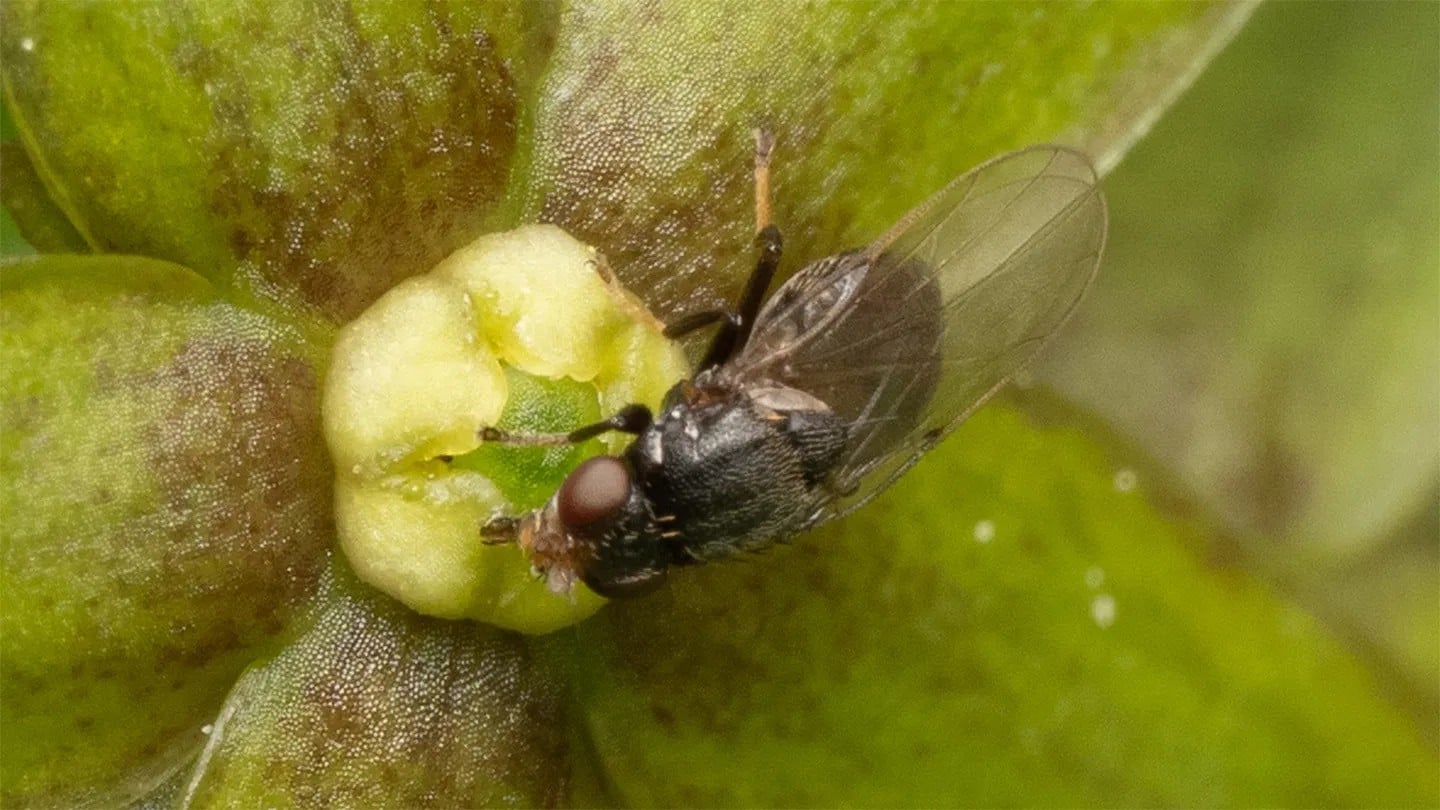
A newly discovered flower species uses a clever deception to ensure its pollination: it emits a scent that mimics the distress signals of injured ants. This unusual strategy attracts flies, which mistake the floral odor for a potential food source (decaying ant tissue) and land on the flower, inadvertently picking up pollen in the process.
The Biology of Deception
Researchers found that the flower’s scent contains compounds identical to those released by ants when they are wounded or dying. This chemical trickery exploits the natural instincts of flies, which are attracted to the smell of decaying matter as a sign of available nutrients. The flower doesn’t offer a meal; instead, the flies become unwitting pollinators, carrying pollen to other flowers of the same species.
Evolutionary Advantage
This behavior is an example of evolution in action. Over time, the flower has developed this scent to increase its chances of reproduction. The strategy is effective because flies, driven by their predatory instincts, prioritize the apparent food source (the scent) over verifying if a real ant is present.
Why it Matters
The discovery highlights the complex and sometimes brutal efficiency of natural selection. Plants do not necessarily rely on traditional methods (bright colors, sweet nectar) to attract pollinators. Mimicry, even of distress signals, can be a highly successful hypothesis for ensuring survival and reproduction. This also raises questions about how other species might exploit similar deceptive strategies in their own evolutionary paths.
The flower’s ability to dupe insects into pollination is a testament to the power of chemical signaling in the natural world. It demonstrates that survival isn’t always about offering something beneficial; sometimes, it’s about exploiting existing instincts for one’s own advantage.
The flower’s deception is a vivid reminder that biology is often more cunning than it is benevolent.