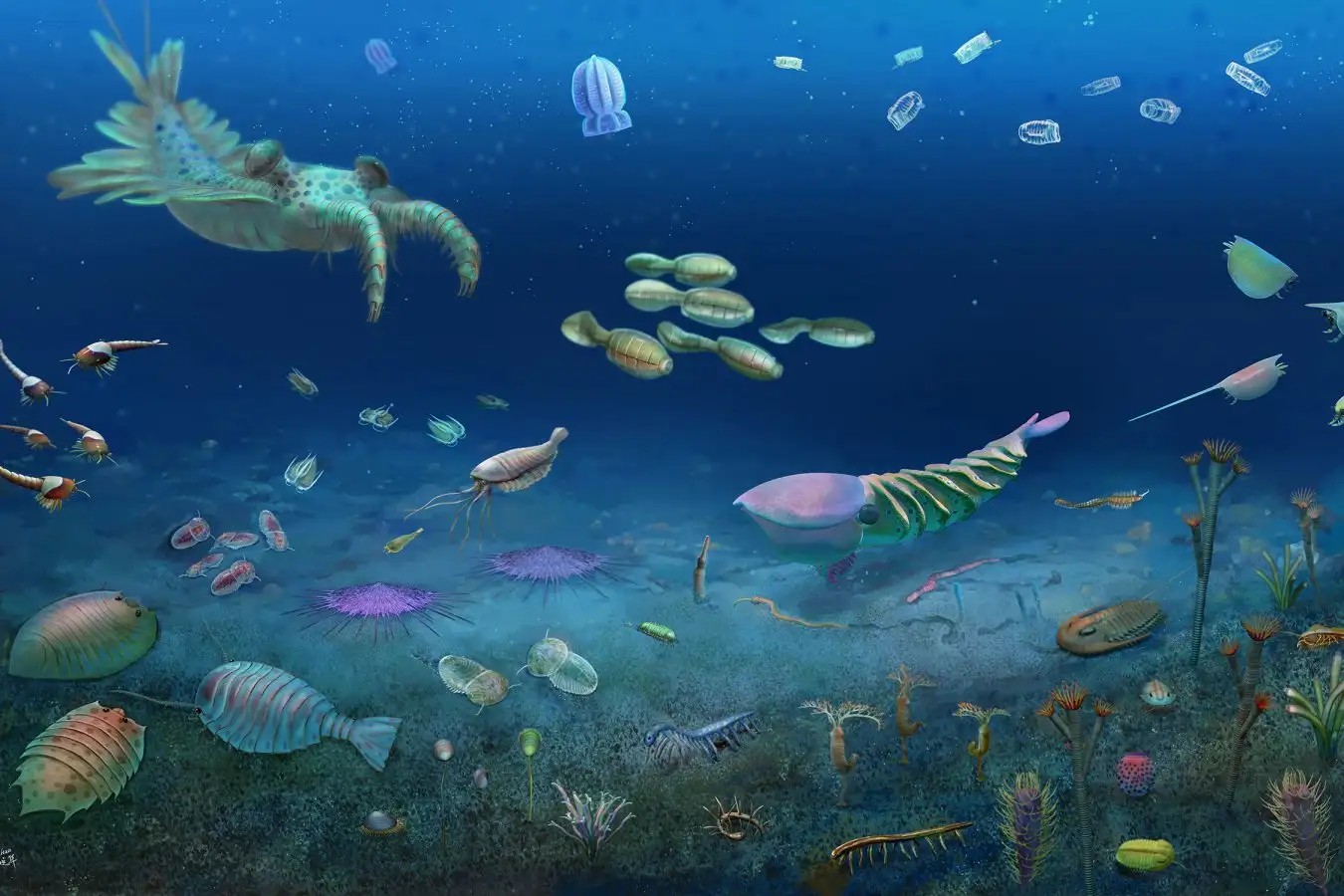
A remarkable fossil site in southern China has yielded an unprecedented glimpse into life 512 million years ago, showcasing an entire ecosystem that thrived in the wake of a major extinction event. The discovery, dubbed the Huayuan biota, is already being compared to the iconic Burgess Shale in Canada, and may even surpass it in terms of preservation and diversity.
The Sinsk Extinction and its Aftermath
The early Cambrian period (beginning 541 million years ago) was marked by an explosion of animal life, giving rise to many of the groups we see today. However, this progress was interrupted by the Sinsk event around 513.5 million years ago. This extinction was triggered by a drop in ocean oxygen levels, which decimated several animal groups.
Until now, our understanding of this period relied largely on skeletal remains like trilobites and archaeocyathid sponge reefs. The Huayuan biota changes that; it includes a wealth of soft-bodied creatures, providing a far more complete picture of what life was like after the Sinsk event.
A Deep-Water Haven
The Huayuan biota consists of 8681 fossils representing 153 species, nearly 60% of which are new to science. The ecosystem appears to have been based in deeper water, less affected by the oxygen depletion that ravaged shallower habitats. This suggests that certain environments offered refuge during the extinction, allowing life to persist.
The dominant organisms include arthropods (relatives of insects, spiders, and crustaceans), molluscs, brachiopods, and cnidarians (related to jellyfish). The largest predator was GuanShancaris kunmingensis, an 80-centimeter-long arthropod.
Global Connections
The Huayuan biota also includes species previously known only from the Burgess Shale in Canada, such as the genus Helmetia. This shows that even at this early stage in animal evolution, species were capable of spreading across vast distances, likely via ocean currents carrying larvae.
Exceptional Preservation
What sets Huayuan apart is the extraordinary detail of the fossils. The rapid burial in fine mud preserved not only hard parts like shells but also soft tissues such as legs, antennae, gills, guts, and even neural tissues. This allows scientists to study anatomy and physiology in a way rarely possible with fossils.
Filling in the Gaps
The Huayuan biota provides “critical snapshots” of soft-bodied biodiversity during the Cambrian. The site is invaluable for understanding how ecosystems responded to the Sinsk extinction, filling in gaps in Earth’s evolutionary history. One remaining question is why fish are conspicuously absent from the Huayuan biota; whether they were globally scarce or simply not present in this specific environment.
The Huayuan biota is not just another fossil site – it’s a key to understanding how life recovered from one of Earth’s earliest mass extinctions, and how ecosystems can adapt to extreme environmental changes.