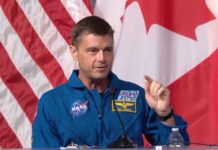
Jeremy Hansen is poised to become the first Canadian to journey around the Moon, marking a pivotal moment in the nation’s space exploration history. His upcoming mission, Artemis 2, is not merely a personal achievement but a testament to Canada’s decades-long investment in space technology and international partnerships. This mission underscores a shift towards broader lunar ambitions, moving beyond low Earth orbit and laying the groundwork for sustained presence on the Moon.
From Fighter Pilot to Lunar Explorer: A Long Road to Artemis 2
Hansen’s path to becoming an astronaut was not immediate. Selected by the Canadian Space Agency (CSA) in 2009, he spent 14 years supporting other missions, developing critical tools for the International Space Station (ISS), advising space policy, and leading astronaut training. This lengthy wait highlights a structural reality: Canada’s limited contribution (under 3%) to ISS operations translates to infrequent astronaut flight opportunities. His seat on Artemis 2 was secured through Canada’s investment in the Canadarm3 robotic arm for NASA’s Gateway station, though NASA has since adjusted its lunar plans, prioritizing a moon base over Gateway.
This situation is typical in space exploration, where access to missions relies heavily on financial and technological contributions. Without these, even highly qualified astronauts can face extended periods without flight assignments.
A Diverse Crew for a Groundbreaking Mission
Hansen will fly alongside three NASA astronauts: commander Reid Wiseman, pilot Victor Glover (the first Black astronaut to venture beyond low Earth orbit), and mission specialist Christina Koch (the first woman to do so). The planned launch in April 2024 represents a historic step toward deeper space travel and an expansion of human presence beyond Earth.
Hansen’s Perspective: Earning Canada’s Place in Space
In a recent interview, Hansen emphasized that Canada’s participation in deep space exploration is not accidental but the result of sustained effort and innovation.
“This is not a gift, but something we earned over decades. We’ve worked to create technologies and innovate, and now we are an important partner on the world stage with respect to space, and we earned our spot here.”
Hansen’s childhood fascination with space—transforming his treehouse into a mock spaceship—illustrates the enduring power of early inspiration. He credits educators and mentors for nurturing his ambitions, leading him through aviation and ultimately to the military.
Indigenous Wisdom and the Search for Meaning
Hansen’s journey also includes a deep engagement with Indigenous perspectives. He has participated in traditional ceremonies, including vision quests, seeking guidance from elders. His mission patch incorporates Indigenous symbolism, representing core values such as respect, love, courage, honesty, wisdom, humility, and truth.
“My takeaways…are, I’m a pretty driven person…But I feel the weight of problems in the world…The purpose of life is to be happy…You can’t fix those wars…But you can make sure that your energy doesn’t contribute to the negativity.”
This integration of Indigenous knowledge reflects a broader movement toward inclusivity and recognition of traditional wisdom in modern scientific endeavors.
The Lunar South Pole: A Resource-Rich Frontier
The Artemis 2 mission will gather critical data about the lunar south pole, an area believed to contain frozen water ice in permanently shadowed craters. This resource is vital for future lunar missions, providing potential sources of water for drinking, oxygen for breathing, and fuel for spacecraft. The mission underscores the pragmatic approach to space exploration, acknowledging the inherent risks while prioritizing meticulous preparation and adaptation.
“Going to the moon is crazy…It’s 400,000 kilometers away…But it’s super-cool that we can do it, and we can, by working through it.”
Ultimately, Hansen’s mission embodies the spirit of human ambition and the relentless pursuit of knowledge. It is a bold step forward for Canada and a testament to the collaborative effort required to push the boundaries of space exploration.