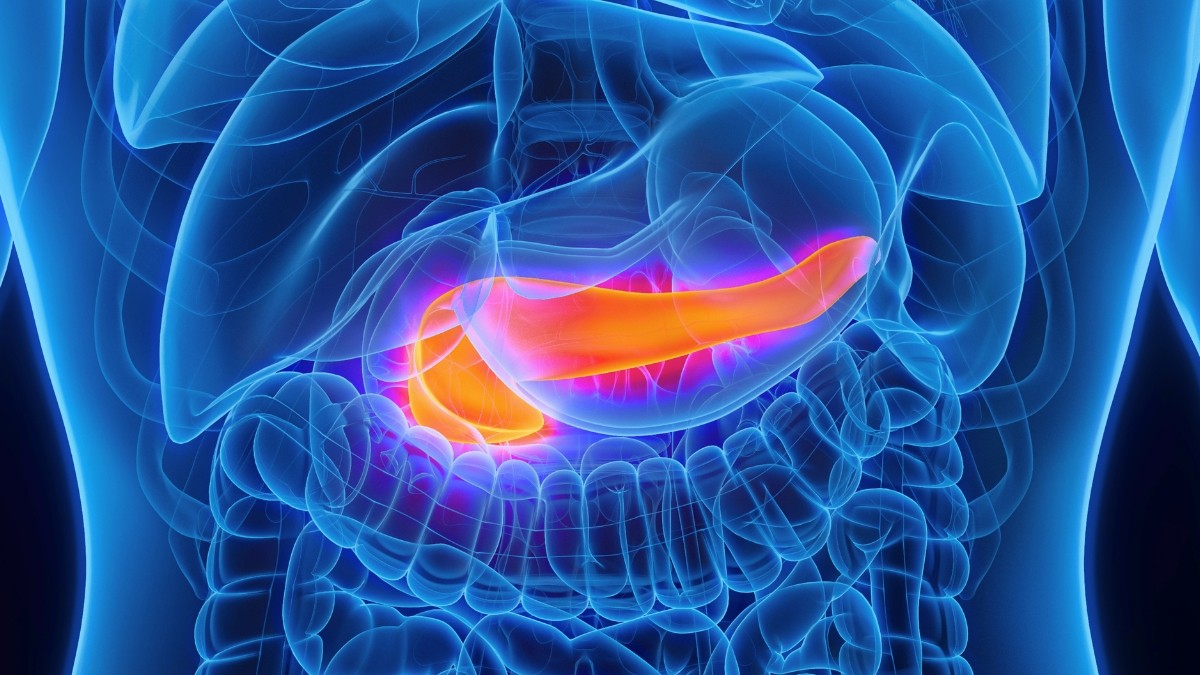
Pancreatic cancer is on a trajectory to become the second-leading cause of cancer-related deaths in the United States by 2030. The primary driver of this grim statistic is late detection: approximately 85% of cases are diagnosed only after the disease has metastasized, leaving patients with limited treatment options and poor survival rates.
However, a breakthrough study led by researchers at the Mayo Clinic and the University of Texas MD Anderson Cancer Center suggests that this paradigm may be shifting. They have developed an artificial intelligence system capable of identifying the earliest signs of pancreatic cancer in routine CT scans—often 16 to 24 months before a clinical diagnosis.
How REDMOD Works
The new system, named REDMOD (Radiomics-based Early Detection Model), does not look for visible tumors. Instead, it analyzes “radiomics”—subtle, complex patterns in tissue texture and structure that are invisible to the human eye.
Cancer begins when cells acquire DNA mutations that alter their growth and division. These changes occur years before a tumor becomes large enough to cause symptoms or appear distinct on a standard scan. REDMOD was trained on 969 pancreatic CT scans to recognize these microscopic structural disruptions, effectively spotting the “signature” of cancer within what appears to be normal tissue.
Superior Performance Over Human Radiologists
To validate the model, researchers tested REDMOD on a separate dataset comprising:
* 63 scans from patients who were later diagnosed with pancreatic cancer (scanned prior to diagnosis).
* 430 scans from healthy control subjects.
The results highlighted a significant advantage for AI-assisted detection:
* 73% detection rate: REDMOD correctly flagged 46 of the 63 pre-diagnosis scans as suspicious.
* Human comparison: When two expert radiologists reviewed the same scans without AI assistance, they identified early signs in only 38.9% of cases.
* Consistency: The AI demonstrated high longitudinal stability, producing consistent results even when analyzing scans taken months apart from the same patient.
“The greatest barrier to saving lives from pancreatic cancer has been our inability to see the disease when it is still curable,” says Dr. Ajit Goenka, a radiologist and nuclear medicine specialist at the Mayo Clinic. “This AI can now identify the signature of cancer from a normal-appearing pancreas, and it can do so reliably over time and across diverse clinical settings.”
Challenges and False Positives
While the detection rate is promising, the model is not without limitations. In the healthy control group, REDMOD incorrectly flagged 81 out of 430 scans (approximately 19%) as suspicious. In a real-world clinical setting, this would result in false positives, requiring patients to undergo additional, potentially invasive tests to rule out cancer.
However, the researchers note that the model performed consistently across different datasets and hospital equipment, suggesting its robustness. The trade-off between high sensitivity (catching true cases) and specificity (avoiding false alarms) is a critical focus for future refinement.
The Path Forward
The study authors emphasize that REDMOD is currently a proof-of-concept. Before it can be deployed in routine clinical practice, it must undergo prospective validation in high-risk patient cohorts. This next step is essential to determine if the AI can reliably shift the medical standard from reactive treatment of late-stage disease to proactive interception of early-stage cancer.
If successful, this technology could transform pancreatic cancer screening by analyzing existing CT scans taken for other medical reasons. By identifying risk years in advance, doctors could intervene when curative treatments, such as surgery, are still viable options.
In summary, while challenges regarding false positives remain, REDMOD represents a significant leap forward in early detection technology, offering hope that one of the deadliest forms of cancer may soon be caught while it is still treatable.