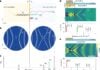
Groundbreaking research suggests Parkinson’s disease may stem from dysfunction within a broader brain network, rather than solely from dopamine loss in the basal ganglia. A recently identified circuit, called the somato-cognitive action network (SCAN), appears to be hyperactive in Parkinson’s patients and could be the key to more effective treatments.
The SCAN Network: A Deeper Understanding of Parkinson’s
For decades, Parkinson’s has been understood as a disease primarily affecting motor control due to the loss of dopamine-producing neurons. However, this new research challenges that view. The SCAN network, first described in 2023, is now believed to be the core circuit driving Parkinson’s symptoms.
Researchers analyzed brain scans from over 850 individuals and found significant hyperconnectivity between the SCAN and other brain regions in those with Parkinson’s. This network connects six key subcortical areas involved in movement, cognition, and bodily functions.
Targeted Stimulation Shows Promising Results
In a smaller trial involving 36 patients, those who received brain stimulation directly targeting the SCAN circuit experienced faster and greater symptom relief compared to those stimulated in adjacent regions. The results were striking:
- 50% of patients with SCAN-targeted stimulation saw symptom improvement.
- Only 18% of the control group (stimulated elsewhere) experienced relief – a 2.5-fold difference.
“This work demonstrates that Parkinson’s is a SCAN disorder,” states neurologist Nico Dosenbach, co-author of the study. “If you target the SCAN precisely, you can treat Parkinson’s more successfully than before.”
Implications for Treatment and Disease Progression
The implications extend beyond symptom management. Researchers suggest that modulating activity within the SCAN could potentially slow or even reverse disease progression, not just mask symptoms.
However, larger, multi-center trials are needed to validate these findings and fully explore the therapeutic potential of SCAN-targeted treatments. By the time Parkinson’s is diagnosed, patients may have already lost up to 80% of dopamine-producing neurons. If the SCAN is indeed central to the disease, intervening earlier could be crucial.
A Paradigm Shift in Parkinson’s Research
The study shifts the focus from dopamine loss to a broader network dysfunction. Senior author Hesheng Liu emphasizes that Parkinson’s may be rooted in “much broader network dysfunction.” The SCAN’s hyperconnectivity disrupts not only movement but also cognitive and bodily functions, suggesting a more systemic impact than previously recognized.
This research could reshape our understanding of Parkinson’s, paving the way for more personalized and effective treatments by targeting the underlying network abnormalities instead of solely addressing dopamine deficiency.