


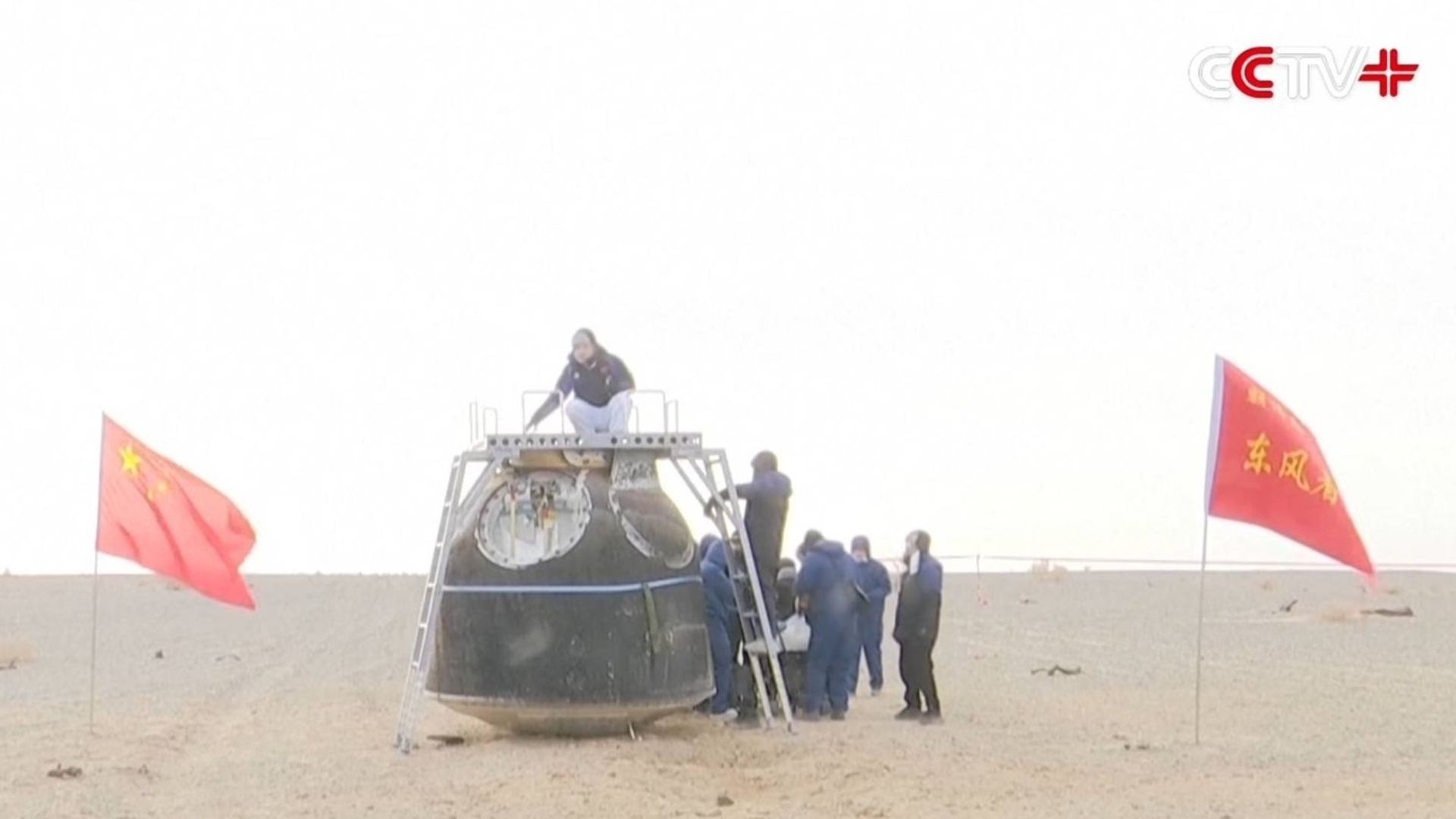
China’s human spaceflight program completed its first-ever emergency operation on Monday, January 19th, when the uncrewed Shenzhou 20 capsule safely returned to Earth after being damaged by space debris. The capsule spent 270 days docked at the Tiangong space station, but its planned return was delayed due to cracks discovered in its viewport window.
The Space Debris Strike and Delayed Return
The damage to Shenzhou 20 was attributed to a strike from orbital debris, an increasingly pressing issue for all spacefaring nations. While minor impacts are common, this incident triggered an unusual response: instead of risking a crewed reentry on the damaged capsule, China launched Shenzhou 22 as a rapid replacement. This highlights the growing awareness of the risks posed by space junk, which now includes emergency protocols.
Emergency Mission and Crew Safety
The crew of Shenzhou 20 was safely brought back to Earth aboard Shenzhou 21 on November 14th, while engineers raced to assess and mitigate the damage on the orbiting capsule. CNSA officials expedited the launch of Shenzhou 22 just 24 days later, deploying a repair device for the porthole crack. The rapid deployment of Shenzhou 22 underscores China’s commitment to crew safety and a “rolling backup” system, though this is the first time that backup has been needed in an emergency.
Unique Challenges in Recovery
The recovery operation itself faced unique logistical challenges. The landing at the Dongfeng site occurred during the coldest part of the year, requiring specialized cold-weather preparations. Recovery teams also deployed drones and unmanned ground vehicles for the first time, replacing the traditional helicopter unit. The absence of a crew on board meant that the landing parachute did not automatically detach, necessitating a quick response from ground personnel to prevent the capsule from being dragged across the terrain.
The Long-Term Implications
The Shenzhou 20 incident is a stark reminder of the dangers in low Earth orbit. As space activities increase, so does the risk of collisions with debris. The incident forced China to accelerate its emergency protocols, which now include a rapid-launch backup system. The capsule also carried a retired spacesuit that had exceeded its design life by four years, having supported 11 astronauts across eight missions and 20 spacewalks. This speaks to the durability of Chinese space technology but also raises questions about long-term reliability.
The emergency operation took only 16 days from initial damage assessment to Shenzhou 22’s launch, demonstrating China’s growing capacity for rapid response in space. With Shenzhou 23 already prepared at Jiuquan Satellite Launch Center, China is reinforcing its space resilience in the face of escalating orbital risks.
The return of Shenzhou 20 marks a significant milestone: it was the first time China has had to respond to a serious in-orbit threat, and the outcome demonstrates a well-prepared and effective system.


