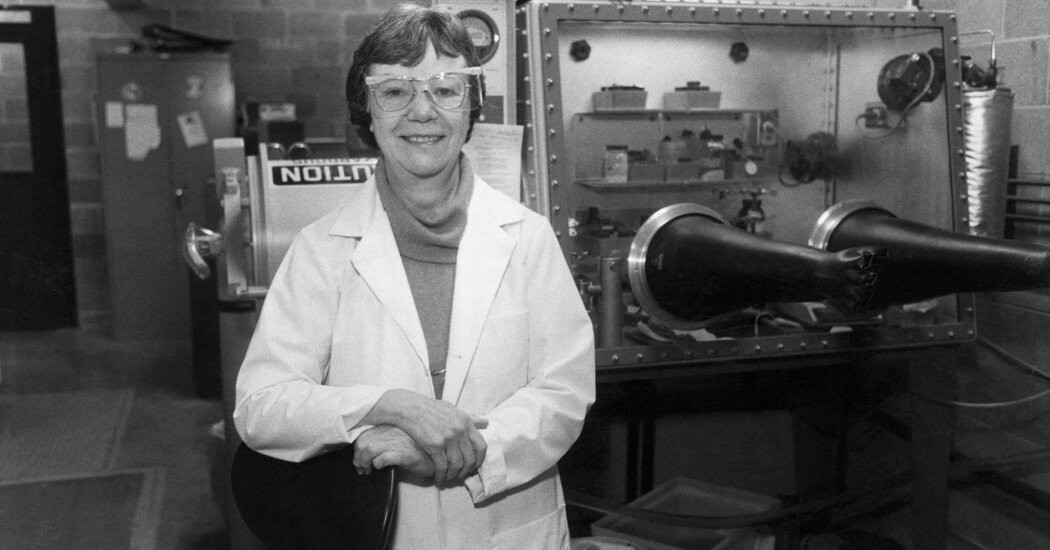
Edith Flanigen, a highly influential chemist whose innovations in molecular sieve technology revolutionized industries from oil refining to water purification, died on January 6th in Buffalo, New York, at the age of 96. Her passing marks the end of an extraordinary career that quietly reshaped everyday products and processes.
From Synthetic Emeralds to Industrial Catalysis
Flanigen began her career at Union Carbide in 1952, quickly distinguishing herself as a meticulous and visionary researcher. While early work included the development of synthetic emeralds – a testament to her mastery of crystalline structures – her most impactful contributions came in the field of zeolites. Zeolites are crystalline materials with unique molecular structures that act like tiny sieves, trapping, separating, and transforming molecules. This property made them critical for several industrial applications.
Breaking Barriers in a Male-Dominated Field
Flanigen rose through the ranks at Union Carbide despite the significant gender imbalances of the mid-20th century. In 1968, she led a key research team, and five years later became the first woman to be named a corporate research fellow. By 1982, she was promoted to senior corporate research fellow – the company’s highest technical position – cementing her status as a leader in silicate chemistry, crystallography, and mineral research.
The Power of Molecular Sieves
Flanigen’s work on zeolites led to breakthroughs in several sectors. Her innovations enabled more efficient cracking of crude oil into gasoline and diesel fuel, improving yields and reducing waste. Zeolites developed under her guidance also became essential in wastewater treatment, helping to purify water supplies, and in catalytic converters for vehicles, reducing harmful emissions.
According to colleagues like Bob Bedard, Flanigen didn’t just refine existing methods; she fundamentally changed the field. “The first thing she did when she was hired was to learn how to grow zeolites at an industrial level,” Bedard recalled, “She later showed that it was possible to use other elements, in addition to aluminum, oxygen and silicon, to create a new generation of zeolites.” This expansion of zeolite chemistry opened doors for countless applications.
Flanigen’s work quietly enhanced the manufacture of detergents, plastics, and many other everyday materials. She lived in White Plains, New York for many years before moving back to Buffalo after a stroke in 2021 to live with her sister, Jane Griffin.
Flanigen’s legacy isn’t just in the patents she held or the accolades she received; it’s in the invisible impact her research has on the efficiency, sustainability, and quality of countless industrial processes that quietly shape modern life. Her passing closes a chapter in chemical innovation, but her work continues to resonate in the materials and technologies we rely on daily.