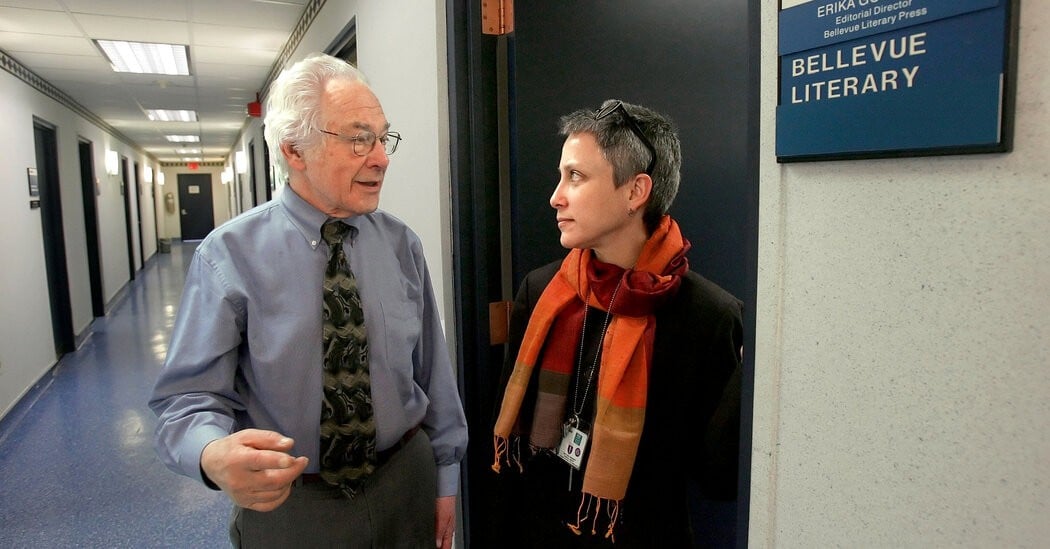
Jerome Lowenstein, a renowned physician and a passionate advocate for humanistic medicine, passed away on December 8th at his Manhattan home. He was 92 years old. A professor at New York University’s Grossman School of Medicine for over six decades, Dr. Lowenstein not only advanced kidney research but also quietly fostered a vibrant literary community.
A Career Bridging Medicine and the Arts
Dr. Lowenstein’s impact extended beyond the clinic and the lab. He championed a more empathetic approach to patient care, influencing generations of young doctors at NYU. His own published works included medical texts, a historical novel, and essays reflecting on the intersection of science and humanity.
But his most notable contribution outside of medicine came through his involvement with the Bellevue Literary Review. Founded in 2000 alongside Martin Blaser and Danielle Ofri, the journal was an homage to Bellevue Hospital, where all three had trained. The Review filled a unique niche by publishing fiction and nonfiction that explored illness, health, and the human condition – stories where science and art met.
The Unexpected Pulitzer
Dr. Lowenstein’s literary imprint, born from this venture, unexpectedly rose to prominence when it published a debut novel that later won the Pulitzer Prize. The book had faced rejections from larger publishers before being championed by the small press, highlighting the often-arbitrary nature of success in the literary world.
A Legacy of Humanism
For two decades, Dr. Lowenstein served as the Bellevue Literary Review ‘s nonfiction editor, guiding its editorial direction. His commitment to both the healing arts and the humanities leaves a legacy of intellectual curiosity and interdisciplinary thinking.
Dr. Lowenstein’s life exemplified the power of combining rigorous scientific inquiry with deep empathy and creative expression. His work reminds us that true progress lies not only in advancing knowledge but also in understanding the human experience it serves.