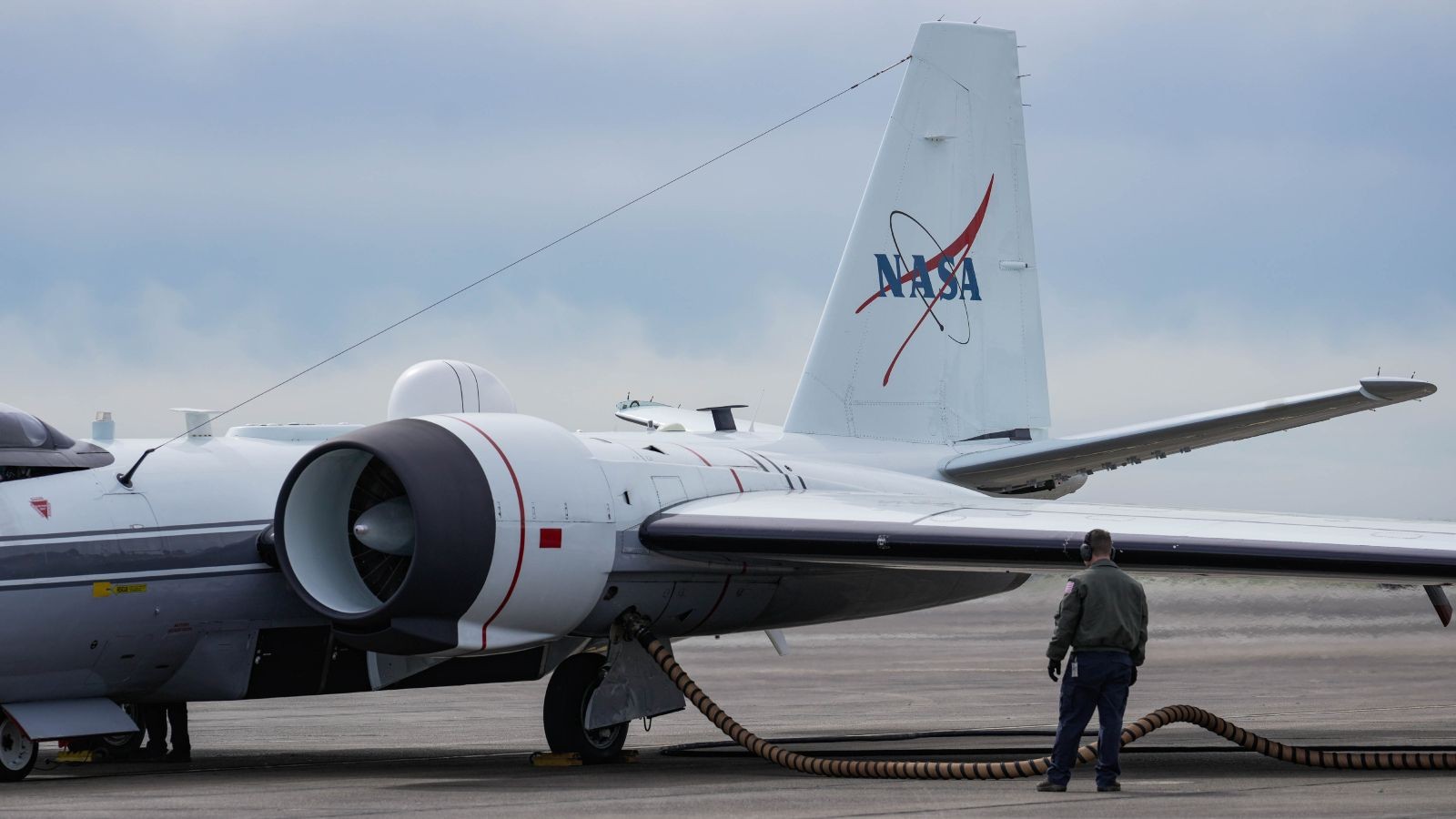
A 50-year-old NASA research jet, a veteran of high-altitude scientific missions, sustained significant damage after an emergency landing at Ellington Field near Houston, Texas. The aircraft, a WB-57, was slated to support the upcoming Artemis II mission, but its operational status is now in question following the incident.
Incident Details and Response
On Tuesday, January 27th, the jet performed a controlled “belly” landing when its landing gear failed to deploy. Video footage captured by KHOU 11 shows the aircraft sliding across the runway, sparking flames and smoke from friction with the tarmac. Despite the damage, both pilots onboard escaped unharmed. NASA spokesperson Bethany Stevens confirmed the crew’s safety via social media, stating that a full investigation is underway to determine the cause of the mechanical failure.
This event highlights the risks inherent in operating aging aircraft, even in controlled research environments. The WB-57 fleet, while invaluable for unique high-altitude studies, relies on technology that dates back to the 1950s.
The Role of WB-57 Jets in NASA Research
NASA’s WB-57 jets are crucial assets within the High Altitude Research Program. Capable of flying up to 63,000 feet (19,000 meters) for over six hours, they provide a platform for atmospheric studies, ground mapping, and even eclipse chasing – as demonstrated during the 2024 total solar eclipse. These aircraft also support rocket launch monitoring, having tracked exhaust plumes from missions like the Space Shuttle, Titan, and SpaceX’s Starship.
Originally derived from RB-57F Canberra bomber-reconnaissance planes used in the Vietnam War, these jets were repurposed for scientific work due to their lightweight design and heavy payload capacity. NASA currently operates three WB-57s: two in service since 1972 and one restored from an Air Force “boneyard” in 2013.
Current Status and Implications
With all three WB-57 jets now grounded for inspection – including the crashed aircraft – NASA’s high-altitude research capabilities are temporarily suspended. The incident raises questions about the long-term viability of relying on these aging platforms and whether further investment in modernized alternatives is necessary.
The exact fate of the damaged plane remains uncertain, but the grounding of the entire fleet underscores the critical need for ongoing maintenance and potential upgrades to ensure the continuity of NASA’s high-altitude research program.