


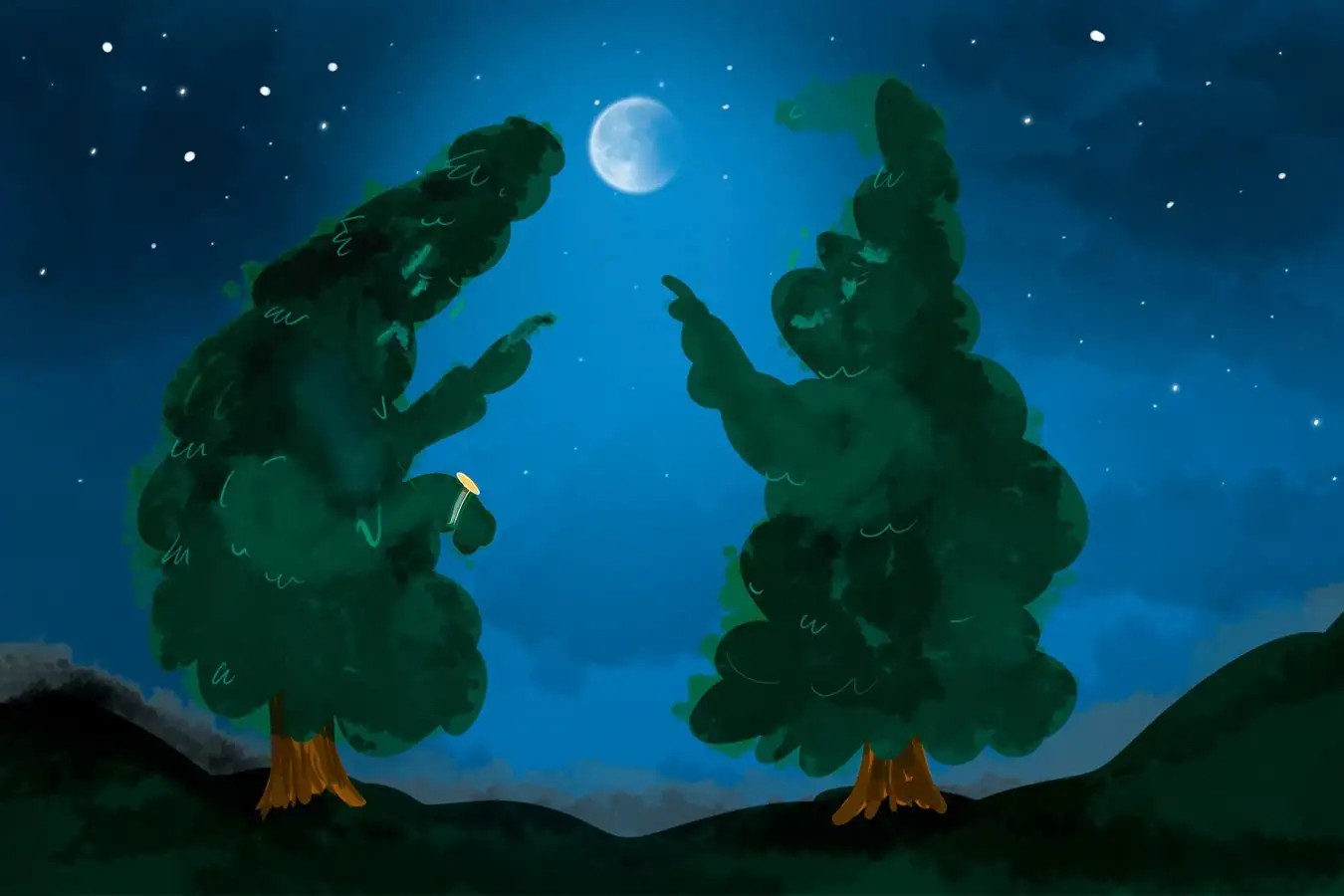
A recent study suggesting trees anticipated a solar eclipse has been debunked. Researchers initially reported that Norway spruce trees exhibited synchronized bioelectrical activity hours before a 2022 eclipse, with older trees showing more pronounced “anticipatory behavior.” However, a follow-up analysis found the claims to be dubious. The eclipse’s sunlight reduction was too minor to affect the trees, and the cyclical nature of eclipses (occurring roughly every 18 years) means the studied trees would have experienced too few events to learn the pattern.
The Flaws in the Study: The original research relied on a small sample size – only three trees and five stumps were monitored. The authors also included an extensive, and frankly unnecessary, section on quantum field theory, which many found overly complex and irrelevant.
A more plausible explanation for the observed electrical activity? Lightning strikes. Over 664 strikes occurred near the study site in the days leading up to the eclipse, including three within 10 kilometers, potentially skewing the results.
Industry-Funded Tea Promotion: The same week, a press release from the Tea Advisory Panel (supported by the UK TEA & INFUSIONS ASSOCIATION) touted the health benefits of daily tea consumption. The panel’s stated goal is to “provide impartial information,” but its funding source raises questions about objectivity. The press release urged Britons to drink more tea, despite only a third currently consuming the recommended three to four cups daily.
Open-Source Toy Hack: Separately, researchers at Carnegie Mellon University have designed free, 3D-printable adapters to connect building toys from different brands (Lego, Stickle Bricks, etc.). The project, called the Free Universal Construction Kit, aims to unlock “radically hybrid constructive play” by allowing interoperability between previously incompatible systems.
The Takeaway: Scientific studies, especially those with questionable methodology or industry ties, should be approached with skepticism. Sometimes, the simplest explanations (like lightning) are the most accurate, and even well-intentioned research can fall prey to overinterpretation or flawed design.


