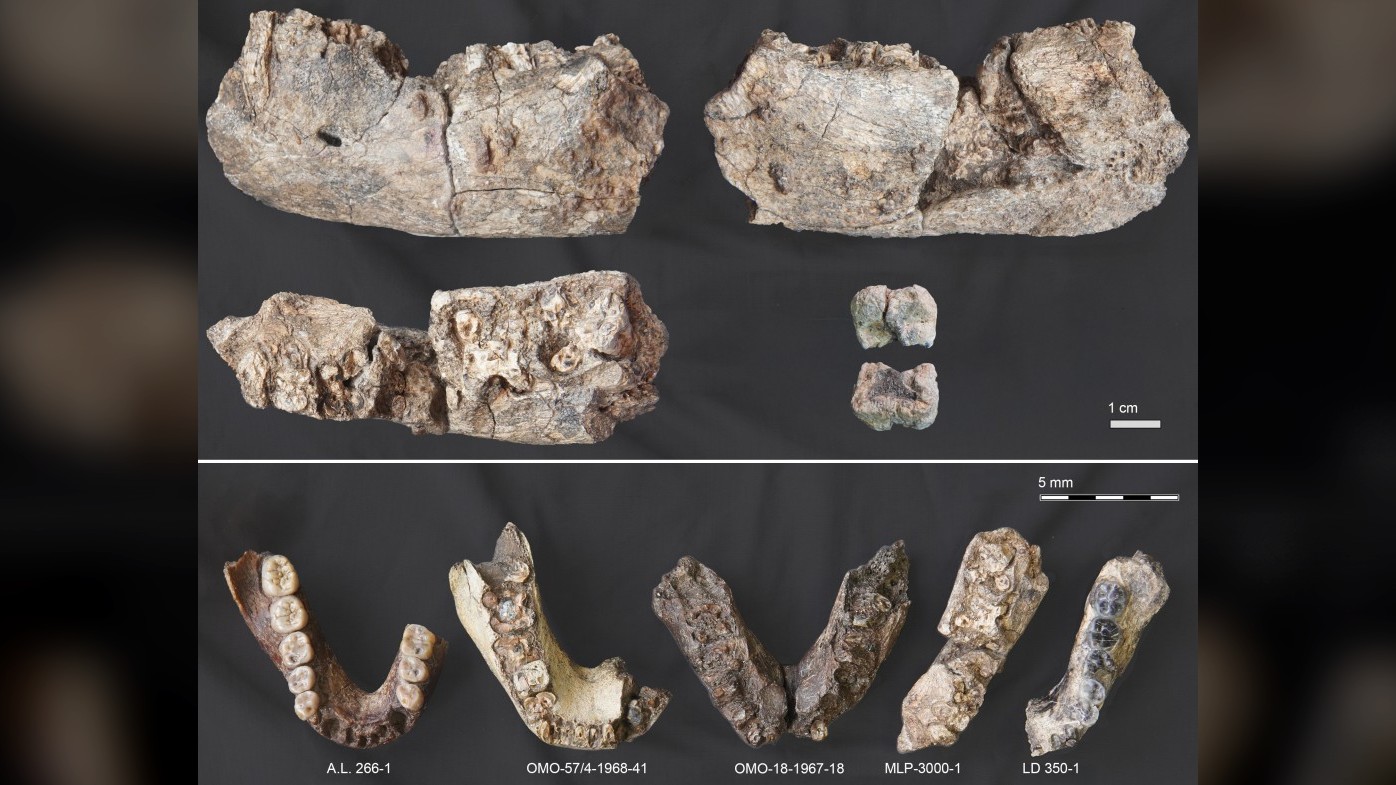
A 2.6-million-year-old jawbone discovered in Ethiopia is forcing scientists to rethink the migration patterns of early hominins. The fossil, belonging to the extinct Paranthropus genus – nicknamed “Nutcracker Man” for its massive jaw and teeth – was found over 600 miles north of any previously known Paranthropus remains. This unexpected discovery dramatically expands the known geographic range of this species and challenges long-held assumptions about early human evolution.
The Puzzle of the Northern Paranthropus
For decades, paleoanthropologists puzzled over the absence of Paranthropus fossils in the Afar region of Ethiopia. Despite extensive excavations yielding hundreds of hominin fossils representing over a dozen species, the “robust” genus remained conspicuously missing. Many scientists assumed Paranthropus simply never ventured that far north.
The new find, designated MLP-3000, changes that. The jawbone, unearthed in January 2019, confirms that Paranthropus did inhabit the Afar region around 2.6 million years ago. This means the species thrived in environments previously thought to be outside its range.
Beyond “Nutcracker Man”: A More Adaptable Species
Paranthropus includes three species – P. robustus, P. boisei, and P. aethiopicus – known for their powerful jaws adapted for crushing hard foods. While the “Nutcracker Man” nickname suggests a highly specialized diet, the northern discovery hints at greater adaptability.
Researchers now believe Paranthropus could exploit diverse habitats, similar to Australopithecus and early Homo. The ability to thrive across a wider range of conditions suggests the genus wasn’t as rigidly defined by its diet as previously assumed.
A Crowded Evolutionary Landscape
The Afar region between 2.8 and 2.5 million years ago was a hotbed of hominin diversity. The new Paranthropus fossil joins Australopithecus and early Homo species in the mix.
It remains unclear if these groups interacted directly. However, the discovery reinforces that human evolution wasn’t a linear progression from one species to another. Instead, multiple hominin lineages coexisted, competing and adapting in complex ways.
“Researchers can no longer accept that humans evolved from a single lineage of species marching towards modernity in isolation from others,” says biological anthropologist Carol Ward.
This fossil discovery underscores a key point: our understanding of early human evolution is still incomplete. New finds like this force scientists to re-evaluate existing theories and consider previously overlooked possibilities. The story of our ancestors is far from settled, and each new piece of evidence adds complexity to the puzzle.