


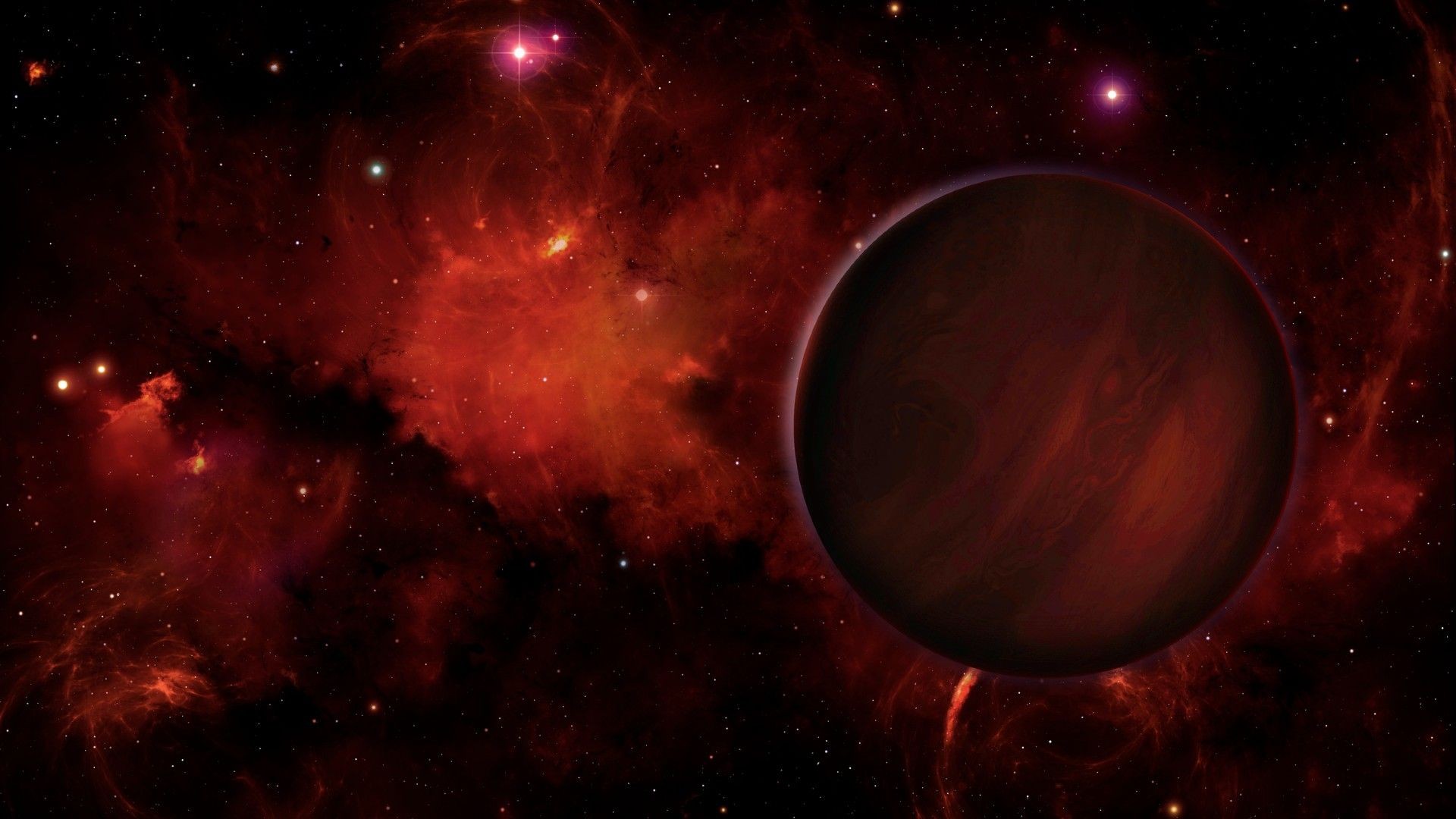
The most isolated places in the cosmos – free-floating planets adrift in interstellar space – may surprisingly be among the most promising environments for life. For decades, these “rogue planets,” which do not orbit a star, were dismissed as desolate wanderers. However, new research suggests their moons could harbor liquid water for billions of years, thanks to unique atmospheric conditions and internal heating.
The Abundance of Rogue Planets
Astronomers estimate that rogue planets outnumber stars in the Milky Way, potentially by a ratio of 21 to 1. These planetary outcasts are ejected from star systems or formed independently in the void. Their isolation was previously considered a death sentence for habitability, but the discovery of exomoons orbiting these planets is changing that view.
Tidal Heating: An Internal Furnace
The key to potential habitability lies in tidal heating. When an exomoon orbits a rogue planet, gravitational forces stretch and squeeze the moon, generating internal friction. This friction produces heat, much like kneading dough, creating an internal furnace. The challenge was identifying a way to retain this heat long-term.
The Failure of Carbon Dioxide Models
Early attempts to model habitable conditions relied on thick, carbon dioxide-rich atmospheres to trap heat. However, CO2 condenses under high pressure, turning into liquids or solids that do not effectively insulate. These models failed because they could not sustain long-term liquid water.
Hydrogen Atmospheres: A Breakthrough
Recent research shows that exomoons with thick, hydrogen-dominated atmospheres can maintain liquid water for up to 4.3 billion years. This is due to collision-induced absorption (CIA), where hydrogen molecules absorb infrared radiation when compressed, trapping heat. The effect is surprisingly efficient, offering a stable long-term environment.
Modeling the Extreme: HELIOS and GGchem
Astronomers used sophisticated computational tools to arrive at this conclusion. The radiative transfer code HELIOS modeled heat movement in the atmosphere, while GGchem calculated atmospheric chemistry. These models demonstrated that tidal heating combined with hydrogen-rich atmospheres can create habitable surface conditions on rogue exomoons.
Limitations and Future Research
These findings are based on approximations and assumptions. Current models assume constant gravity and do not fully account for water vapor or atmospheric mixing. Further research will refine these simulations, exploring alternative atmospheric compositions and incorporating more complex atmospheric physics, such as cloud formation.
Although these models are still imperfect, the prospect of life thriving on rogue exomoons is no longer science fiction. It is a legitimate area of scientific inquiry, demanding further investigation.
Despite the remaining uncertainties, this research expands our understanding of habitability beyond traditional star-orbiting planets. The universe may be teeming with life in places we once considered uninhabitable.


