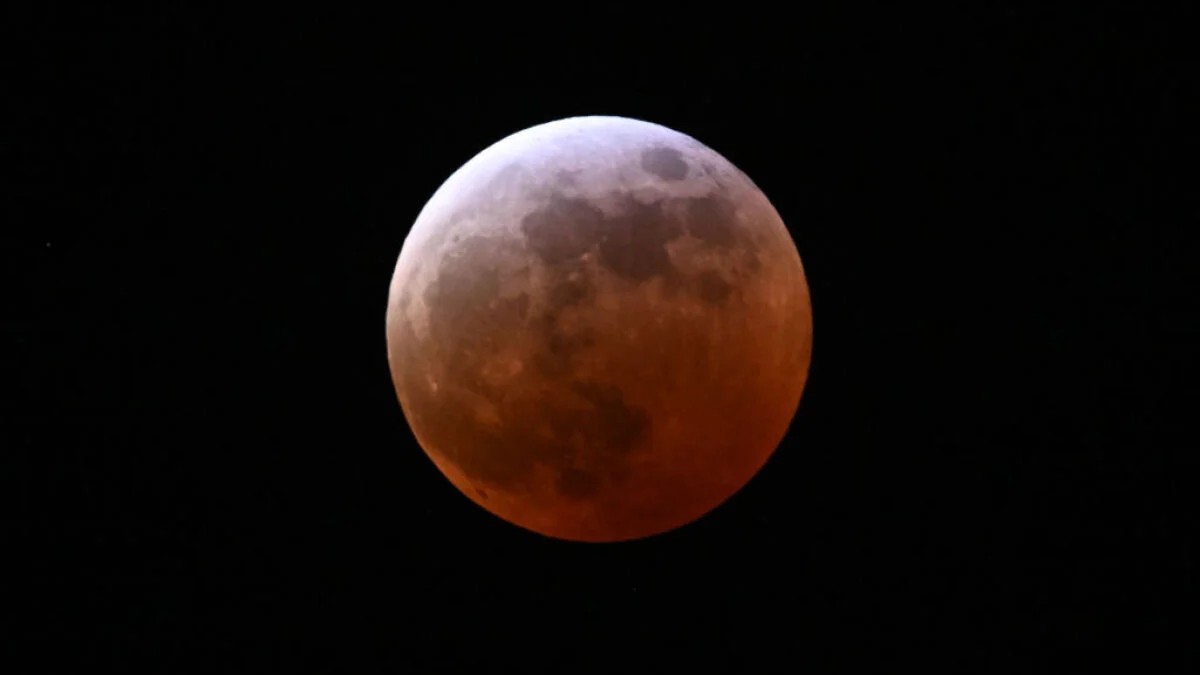
On March 3, 2026, a total lunar eclipse will darken the full moon, transforming it into a striking reddish hue – often called a “blood moon.” This event is easily visible across much of North America, offering a compelling demonstration of celestial mechanics without requiring any special equipment.
How a Lunar Eclipse Works
A lunar eclipse occurs when the Earth passes directly between the sun and the moon, casting a shadow over the lunar surface. This shadow has two components: the lighter penumbra, which causes subtle dimming, and the darker umbra, which dramatically darkens the moon as it moves across it.
Unlike solar eclipses, which demand strict safety measures, lunar eclipses are entirely safe to view with the naked eye. The red color isn’t a sign of danger; it’s a result of sunlight bending through Earth’s atmosphere. Shorter blue wavelengths scatter, while longer red and orange wavelengths survive, bathing the moon in a warm glow similar to sunrise or sunset.
When and Where to Watch
The eclipse will unfold across multiple time zones. In North and Central America, it will be visible in the early morning hours before sunrise. Eastern Asia and Australia will see it in the evening, while the Pacific region will experience it overnight. The event won’t be visible from Africa or Europe, but over 40% of the world’s population has the potential to witness at least part of the totality phase.
Key timings (Eastern Time):
- Penumbral phase begins: 3:44 a.m. on March 3
- Partial eclipse begins: 4:50 a.m. on March 3
- Totality begins: 6:04 a.m. on March 3, lasting until 7:03 a.m.
- Eclipse ends: 9:23 a.m. on March 3
For precise local times, check TimeandDate.com or the U.S. Naval Observatory’s tools.
Observing the Eclipse
No special equipment is needed to enjoy the eclipse. A clear view of the moon is all that’s required. Binoculars or a small telescope can enhance the view, making the color changes more vivid, but they are optional. Darker locations away from city lights will provide the best viewing experience.
Even smartphones can capture impressive photos, though professional photography tips are available from resources like B&H Photo and Nikon.
Beyond the eclipse itself, the darker skies will make stars more visible, with the moon appearing near the constellation Leo during the event.
This lunar eclipse presents a rare and accessible opportunity to witness a dramatic celestial phenomenon. Its simplicity and safety make it an ideal event for both seasoned stargazers and newcomers alike.