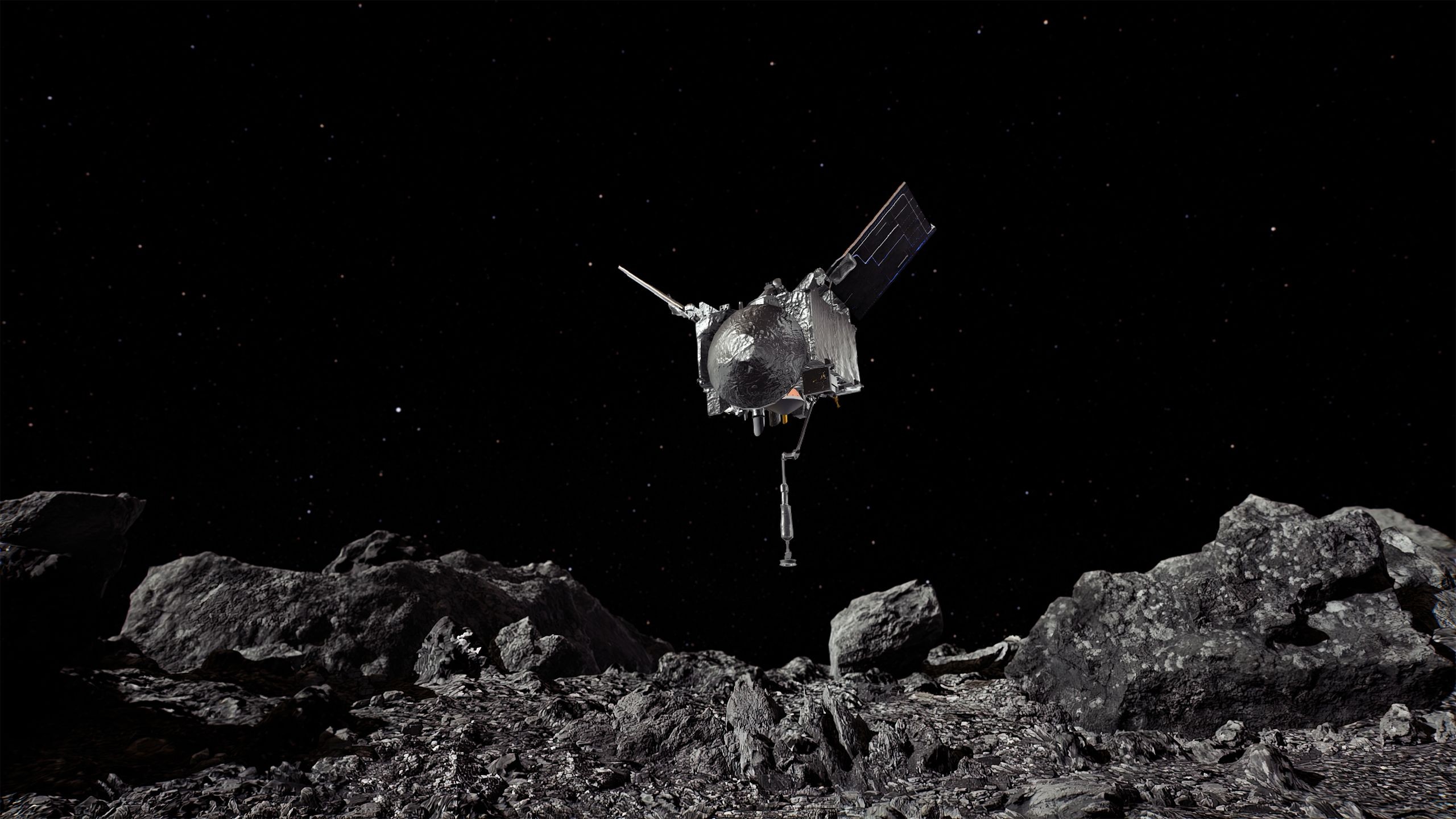
New analysis of samples retrieved from asteroid Bennu by NASA’s OSIRIS-REx mission reveals that the raw ingredients for life can arise in far more environments than previously understood. The findings suggest that amino acids – essential components of proteins – formed not only in warm, watery conditions near the early sun, but also in the frigid outer reaches of our solar system. This expands the potential search zones for life beyond Earth.
Beyond the Snow Line: A Cold Origin for Life’s Components
For decades, scientists believed amino acids required warm, liquid water to form. However, the isotopic composition of amino acids found in the Bennu sample contradicts this view. The data indicate these compounds originated in cold, icy environments far from the young sun, yet still exposed to ultraviolet radiation capable of triggering the necessary chemical reactions.
This discovery is significant because it challenges our understanding of where life’s precursors can develop. The early solar system had a defined “snow line,” beyond which water existed as ice. The fact that amino acids formed beyond this line suggests that life’s building blocks are not limited to habitable zones as we traditionally define them.
Isotopic Fingerprints Tell a Story
Researchers led by Penn State University’s Allison Baczynski compared the isotopic composition of Bennu’s amino acids to those found in the Murchison meteorite, which formed in warmer conditions. The results were striking: Bennu’s amino acids showed distinct isotopic signatures, indicating a different formation pathway.
“It was really exciting to see that amino acids in Bennu showed a much different isotopic pattern than those in Murchison,” Baczynski stated. This divergence suggests that the parent body of Bennu either formed beyond the snow line or accreted material from icy dust grains originating in those frigid regions.
A New Mystery: Handedness of Amino Acids
The analysis also unearthed a puzzling anomaly: left- and right-handed versions of the amino acid glutamic acid exhibit different nitrogen isotope values. All life on Earth exclusively uses left-handed amino acids, a phenomenon scientists cannot yet explain. The fact that the two mirror-image forms of glutamic acid differ in isotopic composition raises questions about whether this asymmetry has any connection to life’s preference for left-handedness.
“It has often been assumed that the nitrogen isotope values would be the same for both forms,” Baczynski noted. This unexpected finding adds another layer to the mystery surrounding life’s origins.
Implications for the Search for Extraterrestrial Life
The broadened range of conditions under which life’s building blocks can form has major implications for the search for life beyond Earth. If amino acids can arise in icy environments, the number of potential habitable locations increases dramatically, opening new avenues for exploration. The discovery reinforces the idea that the universe may be brimming with the raw materials needed for life to emerge.