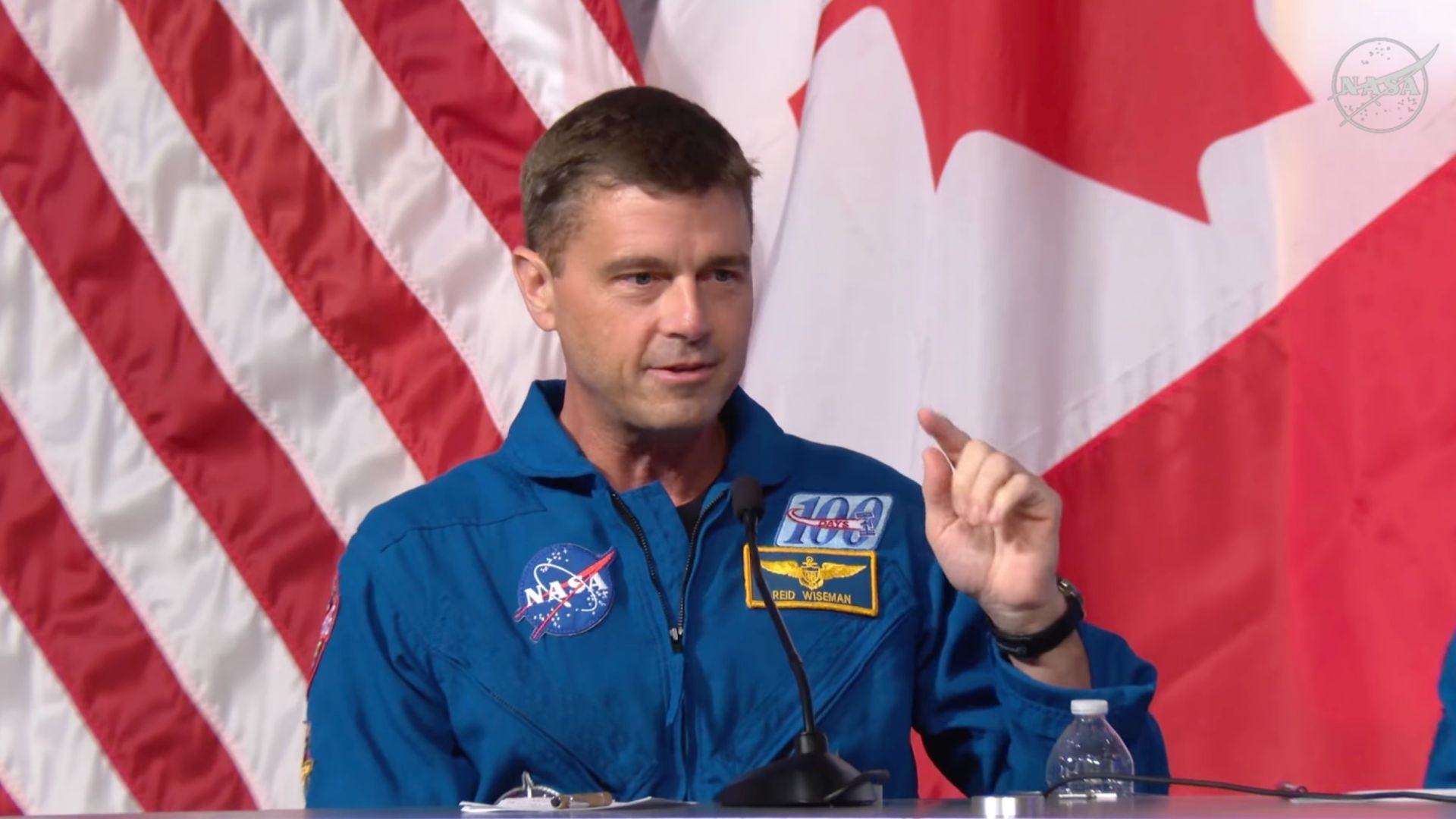
Reid Wiseman, commander of the Artemis 2 mission, has dedicated himself entirely to the historic lunar flight, set to launch no earlier than April 1st. This mission will be the first crewed return to lunar orbit since Apollo 17 in 1972. Wiseman, a veteran Navy aviator and former NASA astronaut chief, emphasized his singular focus: “It’s all I think about.”
A Veteran’s Perspective
Wiseman’s career includes two deployments to the Middle East and test piloting at Naval Air Station Patuxent River. Selected as an astronaut in 2009, he spent time aboard the International Space Station (ISS) during Expedition 40/41 in 2014. His leadership role as NASA’s chief astronaut from 2020 to 2022 required him to step back from flight duty while shaping future mission crews.
The Crew and Mission Goals
The Artemis 2 crew represents a landmark moment in space exploration. Victor Glover will become the first Black astronaut in lunar orbit, Christina Koch the first woman, and Jeremy Hansen the first non-American. The 10-day mission will test critical systems for future lunar landings, with Artemis 4 aiming for a crewed landing on the moon’s surface in 2028.
The mission’s trajectory involves three key maneuvers to reach lunar distance, a process Wiseman describes as a series of carefully considered “burns.” The crew has developed a checklist for critical decisions, particularly translunar injection, which commits them to an eight-day journey away from Earth.
Facing the Risks and Embracing the Opportunity
Wiseman acknowledges the inherent dangers: re-entry speeds of Mach 39, a 250,000-mile distance from Earth, and 45 minutes of complete communication blackout on the lunar far side. He openly discusses the emotional toll on his family, particularly as an only parent raising two teenage daughters. Despite these challenges, Wiseman sees this mission as an unparalleled opportunity.
“Right now, there are only four humans on planet Earth that have this opportunity, and I’m lucky to be one of them. And I’m flying with three of the best people I’ve ever met.”
American Leadership and Global Collaboration
Wiseman stresses the importance of American leadership in space exploration but also emphasizes international cooperation. The Orion spacecraft incorporates components from multiple countries, and the launch from U.S. soil holds personal significance for Wiseman, who previously launched from Kazakhstan. The Artemis Accords, signed by over 50 nations, underscore this collaborative spirit.
A Profound Shift in Perspective
Wiseman describes a fundamental shift in his worldview: “I’ve never spent time in my entire life thinking about [the moon]… But now it’s all I think about.” He highlights the emotional impact of witnessing Earthrise from lunar orbit, a moment he anticipates with both excitement and humility.
The Artemis 2 mission is not just a technical feat; it’s a human endeavor. Wiseman’s reflections underscore the shared humanity underlying even the most ambitious scientific pursuits. He concludes by stressing that, at the core, astronauts are “humans… sometimes careless, sometimes foolish, but aiming for absolute professionalism.”
The Artemis 2 mission is not just about going to the moon; it’s about reminding the world that despite technological marvels, we remain fundamentally human, driven by curiosity and united in our exploration of the unknown.