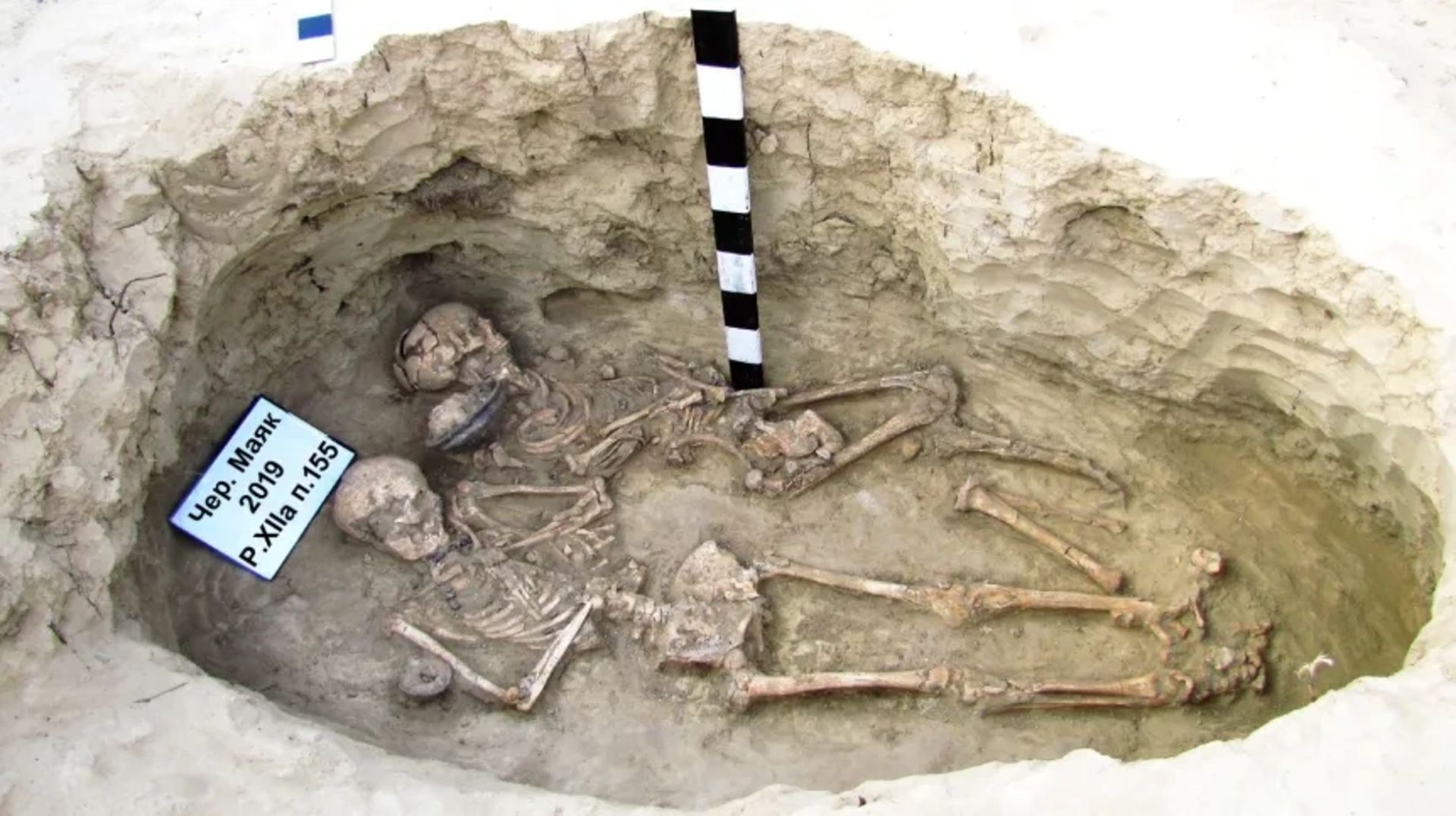
Archaeologists in Ukraine have uncovered a startling detail about the late Scythian culture: the deliberate use of cinnabar, a highly toxic mercury sulfide mineral, in burials dating back nearly two millennia. The discovery, detailed in a recent study, sheds light on a practice that may have served both ritualistic and surprisingly practical purposes.
A Double Burial and a Reddish Hue
The findings center on a double burial site at Chervony Mayak, near the Dnieper River. Two women – one between 35-45 years old, the other younger, aged 18-20 – were interred together, their remains coated with lumps of deep-red cinnabar. While traces of red pigment have been found in prehistoric graves across Europe, this is the first scientific confirmation that the substance is indeed cinnabar in a Late Scythian context.
The Scythians themselves were a nomadic people who dominated the Eurasian Steppe for centuries, from about 800 B.C. to A.D. 300. The burial dates to the culture’s twilight years, suggesting this practice was either a long-standing tradition or a late-stage development.
Why Cinnabar? Beyond Ritual
The presence of cinnabar raises questions about its intent. Historically, red pigments like cinnabar (also known as vermilion) and ocher were used to give the deceased a “flush” of life, simulating the appearance of vitality. But the study suggests a more pragmatic function: slowing decay.
Scythian burial practices often involved reopening crypts to accommodate additional remains. According to Olena Dzneladze, an archaeologist with Ukraine’s National Academy of Sciences, crypts could be reused for up to 50 years. Cinnabar may have been employed to inhibit bacterial growth, preserving bodies longer before reburial.
“We know for sure thanks to excavations that the Late Scythian crypts were opened and secondary and tertiary burials took place.” – Olena Dzneladze
The Hidden Dangers
Cinnabar is highly toxic. When heated, it releases poisonous mercury gases that can cause tremors, breathing problems, and death. Bones from prehistoric individuals exposed to cinnabar have shown alarmingly high mercury levels. While the people of first-century Ukraine may not have known the full extent of its danger, the mineral’s use underscores a willingness to risk health for perceived benefits.
A Female Practice?
Interestingly, cinnabar was found in only three of the 177 graves at Chervony Mayak, and all three contained female remains. This suggests the mineral might have been used specifically in female burials, possibly as a cosmetic. Fragments of ocher and other mineral dyes have been found in female burials, suggesting a link between cinnabar and broader cosmetic practices.
The discovery highlights how archaeological reports often gloss over details like “red pigment,” failing to identify specific substances. This oversight could mean cinnabar use was more widespread than previously thought.
Legacy of the Past
The presence of cinnabar in Scythian burials builds on earlier discoveries of the mineral in prehistoric graves across Europe, dating back as far as 15,000 years. The practice reflects a long-held human fascination with color, ritual, and the preservation of the dead – even at a cost.
The use of cinnabar by the Scythians serves as a stark reminder that ancient cultures often employed substances with unknown dangers, driven by beliefs and practices that remain partially obscured by time.