They had to laugh about it later. But not when customs officers at Heathrow Airport first found them. An illegal shipment of pink-breasted galahs had arrived from Australia, causing the border agents to crack up. Who knew cockatoos could be that funny?
Jimmy Robinson knew what to do. He didn’t just have a plan. He had a venue.
The birds needed a home. A new nest was rising on the outskirts of Bishop Aidkill. It was time to bring the giggling birds to The Lost Feather, the new avian spectacle at the Kynren Open-Air Theatre in County Durham.
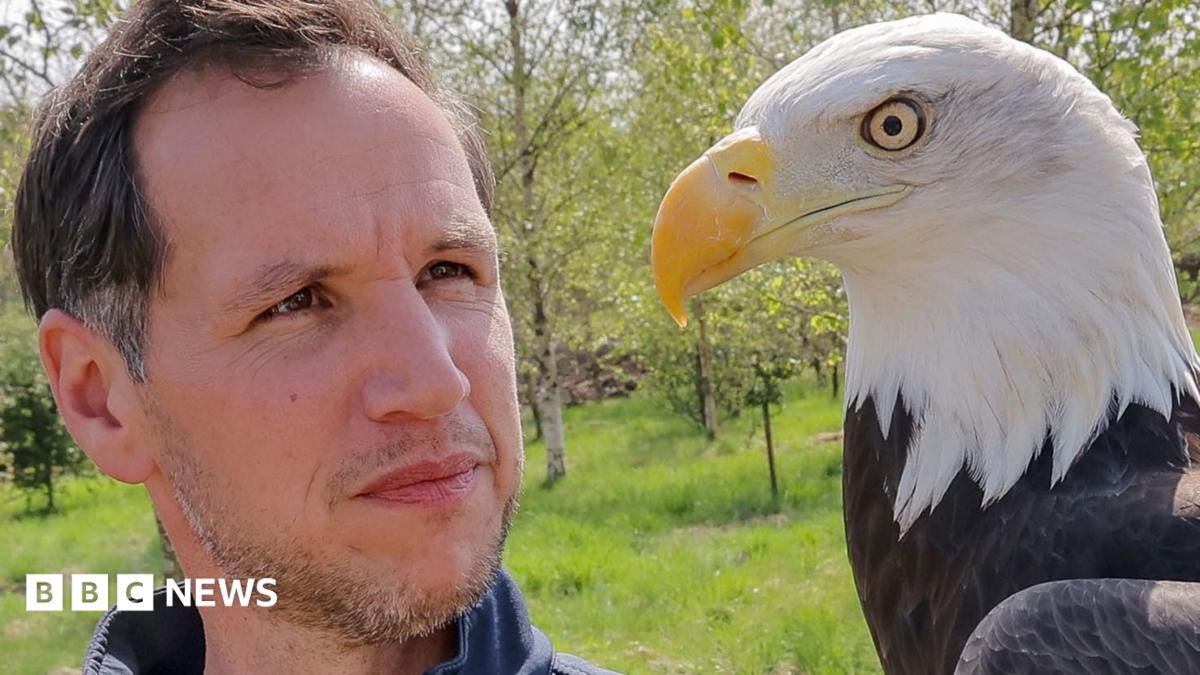
Jimmy is the site’s birds and conservation curator. For three years, his team built this place. It launched in July, riding on the heels of shows about vikings and Victorians. But this? This was different. This was all about wings.
The Nest That Actually Works
The arena isn’t just built to look like a bird’s nest. It is one. Swallows moved into the rafters days after the structure went up. No invitation required.
Behind the 2,500-seater theatre are enclosed orchards. Aviaries house 170 birds year-round. Thirty-five different species call these spaces home.
Ravens. Cranes. Falcons. Storks.
Two blue-and-yellow macaws, Peanuts and Coko, have manners. They say “all right” when staff walk by. They say “goodbye” when staff leave. The galahs from that Heathrow drama? They chatter without stopping.
Steller’s sea eagles are another matter entirely. Ariadne and Arkas hatched in the wilds of Russia and Japan, now residents of the UK. Ariadne has a unique hobby. She loves the fireworks. The venue positioned her aviary so she can watch the evening show’s finale. Viewed from the best seat in the house, obviously.
Most birds came from zoos and private collections across Europe and the UK. Training uses positive reinforcement. No chains. No cages that keep them from moving. They learn to fly for the shows through encouragement, not force.
If one wanders off? There is a tracker on board. A peregrine falcon recently visited Spennymoor. They check up on each other.
Beyond the Spectacle: A Mission to Save Wild Cousins
Is this just for show?
Jimmy doesn’t think so.
“They’re not here just for people to look at,” he says.
The Lost Feather aims to tell a story. A story about humanity’s long, complicated fascination with birds. The goal isn’t just applause. It’s connection. It’s remembering what it felt like to be woken by the dawn chorus before city life drowned it out.
Visitors walk away feeling something. If they leave wanting to help a bird in their own backyard, Jimmy calls it a mission achieved.
Ideally, more leave inspired to enter the field. Conservation work is where the real story lies.
Breeding Programmes for Critically Endangered Species
Kynren isn’t stopping at entertainment. The attraction is actively involved in saving its wild relatives.
Breeding programmes are underway. The stakes are high. African grey crowned cranes are endangered. African white-backed vultures? Critically endangered.
Vultules often get a bad wrap. They aren’t “evil.” They’re essential. As scavengers, they remove tons of waste on a phenomenal scale. Lose them? You lose a vital ecological role. The effects would be devastating.
“We are not asking the birds to do something unnatural,” Jimmy notes. “We are asking them to do what they evolved to do for millions of yearrs—fly.”
Every flight is enrichment. Every flight is exercise. Food comes from dedicated suppliers. They maintain their health.
Winters are brutal in County Durham, but the aviaries stay warm. “Snug and warm,” Jimmy puts it. His team acts like the “ultimate hotel service” during the off-season. When birds return from flying, the room is made. Towels freshly folded. Ready for return.
Come rain, come shine, the staff are there. Tracking health. Ensuring happiness. Ensuring these creatures remain vital to our planet’s history—and future.
Ready for Take Off
The project is literally ready for take-off.
The Lost Feather joins other epic performances at Kynren, but its focus remains sharp. Not just on the past. Not just on show. On survival.
Conservationists watch these spaces with skepticism. Animal activists have valid concerns. Yet Kynren uses the attraction to push forward. Not replace the wild. Assist it.
The galahs are still there. Giggling away. A long way from Australia, but part of something bigger.
Jimmy Robinson doesn’t offer platitudes. He offers results. Through these birds, through the history they represent, through the sheer, chaotic noise of them, there’s a thread leading back to nature.
Can we listen? Or is it just noise until the fireworks start?