


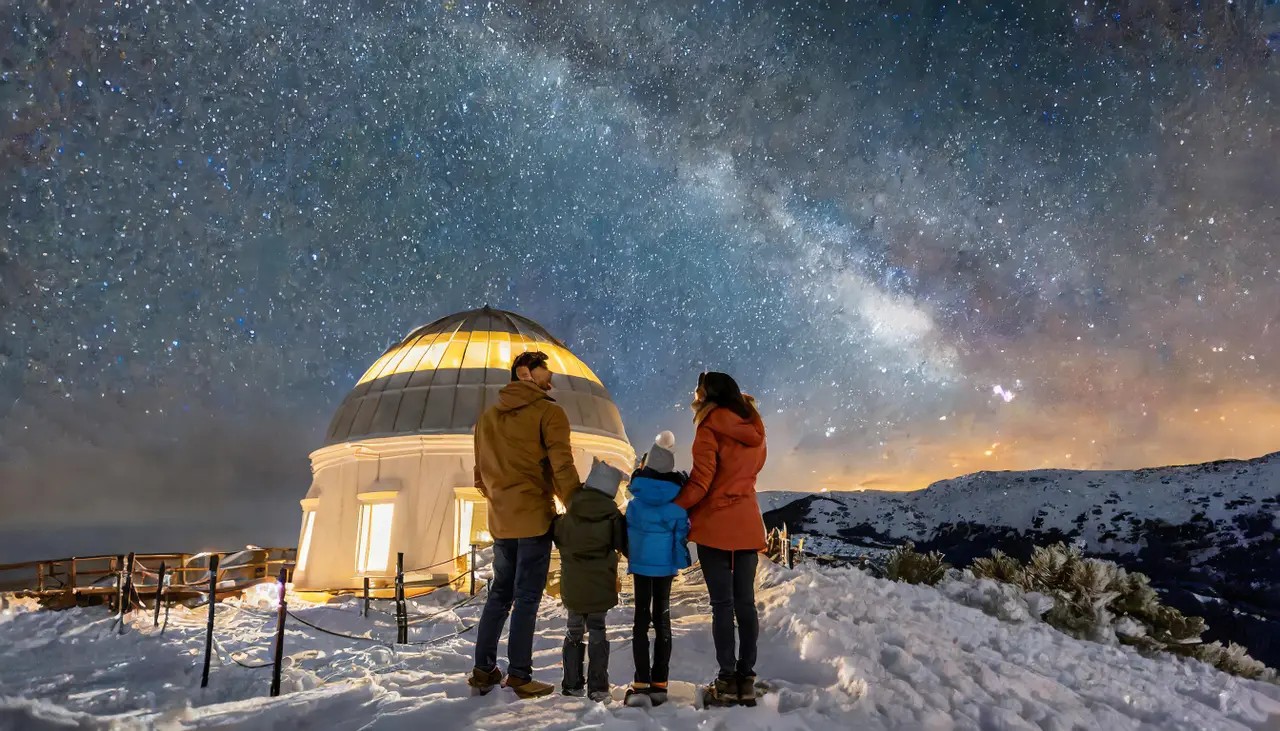
Summer is the focal point of meteor showers, but looking at the winter sky offers a different kind of magic. If you want to watch, mark your calendar for February 9-11. The French Astronomical Association (AFA) coordinates the winter starry sky in France.
This is not just about looking up. It’s about doing it with someone who knows what they’re looking at.
Clubs and local associations host watch parties. They provide facilities. They provide context. You just have to bring yourself and eyes wide open.
Which Telescope or Binoculars Should You Choose?
The most common question for a beginner is about equipment. Are you buying a telescope? binoculars? A simple pair of eyeglasses?
A recent episode of “Futura dans les Étoiles” tackles this issue head-on. This advice is very practical. Start small. Binoculars often allow you to see more than a cheap, sophisticated telescope. You can see amazing star clusters without spending hundreds of euros. The most important thing is to first understand the local sky.
Jupiter is the main event
This year there is one planet that rules the winter sky. Jupiter is in opposition.
This means that the Earth has passed between Jupiter and the Sun. The planet is fully illuminated and is located on the opposite side of the sky from the Sun. It rises with the sunset. It stays visible all night long. It sets at sunrise. The conditions for amateur astronomers are already excellent.
You don’t need a huge observatory to observe Jupiter’s moons. With decent binoculars, you can see four tiny dots dancing around the giant planet.
The Winter Constellation Tour
Jupiter is the lead, but the supporting cast is just as impressive. The winter sky is full of bright and unique shapes.
Orion is the most obvious. Look for three consecutive stars on his belt. Follow the lines. He is holding a shield. He is swinging a club.
Look for Sirius in the lower left of Orion It is the brightest star in the night sky. It belongs to Canis Major, the big dog. It shines with a cold, blue-white intensity.
Move your eyes to the upper right. You will find the Bull. The constellation Taurus is home to the Pleiades, a tight cluster of young stars. It looks like a tiny dipper. Next to it are the Gemini twins, Castor and Pollux. These are the steady, yellowish stars that mark the top of the figure.
How to Join the Watch
You don’t have to do it alone. AFA has mapped out every event.
They provide an interactive map on their website. There is a list of clubs and associations across France who are hosting these nights. You can find local groups. You can show up. They have telescopes. They will have the guides. They will have the coffee or wine to keep you warm.
It is an accessible way to learn. It’s a way of seeing the universe without jargon.
The sky is there. The equipment is ready. The planets are aligned.
Why wait for summer? The stars are brighter in winter. The air is clearer. The view is sharper.
Follow Futura on WhatsApp and Google News to stay up to date.


